Video Conference on Need for Innovations for Luxury Industry Post Covid 19

Covid Crisis is expected to bring about a major change in the buying behaviour of consumers in Luxury segment of India’s retail sector.

Luxury and Lifestyle industry will have to therefore prepare itself to match their business strategies ,with the changed mind set and value system of the luxury consumers, as also the demand pattern , that is likely to emerge in the ‘new normal’.

It would be a pleasure to moderate the Video Conference, organised by PHDCCI ,and interact with the Industry Leaders of this segment.

Webinar on Technology as your partner in Tourism

In the post Covid era, digital and ICT technology can be a game changer for travel and tourism industry.

India Tourism stakeholders , must therefore make the best use of Digital India program ,to accelerate the digital transformation of the sector.
This will not only help the enterprises in travel and tourism industry, to follow the Post Covid ‘Mantras’ of social distancing and contactless services, but would also assist them to become more ‘self reliant’ in the new ‘Atma Nirbhar Bharat’

New Tourism Foundatiön’ s webinar on ‘ Technology as your partner of Tourism’ is a well – timed initiative !! — with Pankaj Manchanda.

Webinar, hosted by ABTO, a Buddhist Tourism promotion association

India, other SAARC nations,ASEAN countries, Japan and South Korea are poised to recover its tourism sector, faster than other parts of the world and are likely to emerge as top preferred tourism destinations globally, post covid 19 , thanks to the low incidence of covid in this region and for remaining relatively ‘health-safe’ so far.

This is, therefore, the right time for Governments and Industry stakeholders of these nations , to gear up and to seize the opportunity of making this region of the world as ‘LeadingTourism Hub’ of the next decade.

It was a pleasure to be a keynote speaker in the Webinar, hosted by ABTO, a Buddhist Tourism promotion association, on the auspicious occasion of Buddha Purnima, with participants from India, Thailand, Indonesia, Nepal and Japan.

The Webinar attempted to address key issues and questions namely, assessment of current situation of travel and tourism industry; time horizon of its recovery ; how have Govts of various countries helped this industry so far ; what kind of further hand holding is required from Govts at this stage and how do we promote cross border tourism, post covid.

My thoughts on the aforesaid questions addressed to me ,during the webinar , are in the attached video film.

https://www.facebook.com/vinodzutshiiasretd/videos/603841487156625/


Video Conference, organised by PHDCCI ,and interact with the Industry Leaders

Covid Crisis is expected to bring about a major change in the buying behaviour of consumers in Luxury segment of India’s retail sector.

Luxury and Lifestyle industry will have to therefore prepare itself to match their business strategies ,with the changed mind set and value system of the luxury consumers, as also the demand pattern , that is likely to emerge in the ‘new normal’.

It would be a pleasure to moderate the Video Conference, organised by PHDCCI ,and interact with the Industry Leaders of this segment.

Handling the COVID-19 Crisis & Comeback Planning – Vinod Zutshi, Former Tourism Secretary

TRAVEL AND Tourism Sector would have the hardest impact globally and on India, among all economic sectors, due to COVID-19. In view of unprecedented travel restrictions and almost complete lockdown, all over the world, UNWTO expects that international tourist arrivals will be down by 20 to 30% in 2020. This expected fall can translate into a decline of international tourist receipts by 300-450 billion US Dollars.

The immediate likely impact, however, would be that millions of jobs both in India and globally are at risk of being lost, as most of the tourism business is in MSME Sector. Further, liquidity crunch and a shortage of working capital with travel & tourism companies is another urgent threat.

COVID-19 DISRUPTION

Prior to COVID-19, the entire industry, all over the globe was in an expansion mode. India Tourism had also been expanding on all fronts viz inbound, outbound and domestic tourism. COVID-19, would, however, slow down the expansion mode. Even for the Industry, it will be appropriate to first “recover the lost ground” and then after due consolidation process, to go again for gradual expansion. Till such time, the domestic and International travelling reaches the pre-COVID-19 level, it will not be a feasible proposition to expand. The industry should wait for the new ‘Supply-Demand Imbalance’ arising from COVID-19 and then should take a call on expansion. I feel that more than expansion, the Industry needs innovation, diversification and digitalisation to meet the challenges of disruption caused by COVID-19.

DEALING WITH THE PANDEMIC

The industry professionals, during this period, should deliberate on taking all possible steps to sustain themselves financially by ensuring the required liquidity and working capital. This is the immediate step which will help them to retain the jobs of their employees and workers, honour their financial commitments and continue to operate in the market, as and when the lockdown is lifted.

The industry must prepare “New Operational Plan” for their own business in the light of new global order. The professionals should study the new demand-supply pattern and should innovate and adapt themselves by strengthening the health protocol, follow SOPs and become digitally strong. It is likely that domestic tourism will begin first, in the initial phase of post lockdown period. Therefore, Industry must put their immediate focus on domestic tourism, more than inbound or outbound.

The tourism associations and industry chambers must come on a common platform to seek support from Union and State Governments in the form of bail-out package, reliefs in taxes and by way of special schemes for easing the liquidity flow to the industry players.

RECOVERY ASPECTS

Looking at the current scenario of COVID-19 crisis all over the world, it may take some time for the industry to recover. It is only when the lock-down ends, and after assessing the extent of damage to the economic and public health all over the world, that it will be appropriate to estimate the horizon of recovery.

How soon the Industry recovers will also depend on:

* The extent of ‘safe zones’ and ‘safe destinations’, from a health safety point of view, that emerge after the crisis.

* The financial health of key Industry players like Airlines, hospitality and travel-trade, and

* How the Industry is able to transform and innovate itself to the new global order.

One another issue is that post-COVID-19, as the business operations in travel and tourism sector will have to start at a slow pace initially, involving less volume of business, the Industry may face the issue of viability in operations, till it attains an optimal volume of business.

GOVERNMENT SUPPORT

The Industry can seek support from the Government in many ways. However, at this point of time when the first and foremost requirement of the Country is to overcome the present health emergency, the Industry should extend its unconditional and whole-hearted support, proactively, to strengthen the Government machinery.

Government support can be sought in the following respects:

* Ensure ease of liquidity through soft loans/working capital at reduced interest rates, through financial institutions. Creation of a National Corpus Fund can also be considered to serve the immediate credit needs of the industry.

* Reduced tax burden including lowering of GST rate and deferred GST.

* Relief in taxes and charges by State Governments in the form of a waiver of entertainment tax, luxury tax and reducing the power and water rates.

* Ministry of Tourism could consider constituting a ‘National Tourism Recovery Committee’ to address the issues and demands of the industry and to bring out a ‘Recovery Package’ comprising short term, medium-term and long term, fiscal and monetary measures.

POST COVID-19 SCENARIO

Let us all be very clear, that even after the COVID-19 threat mitigates, the global order of the travel & tourism sector, will see a paradigm shift and a reset. There shall be a new ‘protocol’ both for International and domestic travelling, primarily based on health safety of traveller and of the host destination. Countries will revisit and review their Visa policies. The New Visa regime of countries is likely to be guided also by the health safety of the host country. Governments all over the world are likely to put health protocols and Standard Operating Procedures (SOPs) in place, for industry and for travellers to follow.

“Health Safety” shall, henceforth, become an important pillar of the Travel and Tourism Competitive Index. Tourists, particularly leisure and holiday travellers, will, in the initial 1-2 years, prefer a destination which has remained relatively safe during the COVID-19 crisis and is perceived as a safe destination. Travel & Tourism Industry will, therefore, have to adapt itself to the new national and global order of travelling, by ensuring the health protocol and health safety of the travellers.

And therefore, those in the Industry who can innovate and adapt better to this new order will be the fittest and sharpest to recover faster than the others.

INDUSTRY PROMOTION SUCCEEDING PANDEMIC

If India overcomes the COVID-19 crisis relatively more successfully, we shall emerge as a ‘Safer and Healthier’ tourist destination in the world. In times to come, the destination which can brand itself as a ‘health-safe’ destination, will be a preferred destination for travel. Within India also there may emerge ‘safer regions and destinations’. The domestic travellers, as well as inbound travellers, therefore will prefer to visit such safe destinations only in the initial period.

The branding and promotion strategy of Government and Industry will have to be built around two factors. Firstly, how travel could be made “seamless and health-risk free’’ and secondly, how ‘health-safe’ is the destination.

Travel and Tourism Sector’s historic resilience and its capacity to deal with crisis situations are very well known. The travel & tourism industry will certainly stage a come-back, sooner than later, with more resilience. India Tourism also has to become more resilient and should become strong enough to absorb such unexpected shocks. The country also needs to embrace Sustainable and Responsible Tourism in totality.

My concluding advice to ‘One and All’ is, “Stay home today – to be able to travel tomorrow”.

Disclaimer: The views expressed in the article above are those of the authors’ and do not necessarily represent or reflect the views of this publishing house.

Bad Patch on Travel and Tourism in India due to Corona Virus (Covid-19)

Globally, Travel and Tourism is among the worst affected, of all economic sectors ,due to Corona virus pandemic.In the present scenario,UNWTO has estimated that International tourist arrivals ,all over the world could fall by 20-30% in 2020, resulting in decline in International tourism receipts by 300-450 billion USD.

Tourism sector in India is also obviously the hardest hit.The entire Travel & Tourism industry in the country is reeling under unprecedented crisis and an uncertain future.

As a Short term remedy ,the Industry requires urgent support and special package to manage the current crisis and mitigate the impact . Supporting job retention ,sustaining the self employed and assisting Tourism companies with working capital and liquidity are some of the urgent initiatives required to be taken.

As Medium term measure, the country needs to take steps to accelerate recovery of the Industry by review and relaxations in taxes, charges, levies and regulations ; ensuring integrated and coordinated partnerships between Govt and Pvt Sector and to create confidence in people of the country, about their health safety by establishing SOPs of health protocol for Industry players and for travellers, both domestic and international.

Post Corona crisis, as a long term strategy,India Tourism must become more resilient, by diversification of tourism and by embracing Sustainable and Responsible tourism in totality.

The first and foremost requirement of the Country today, however is to overcome the present health emergency.The country is indeed proud of its travel, tourism and hospitality industry which , in the last few days has come forward to offer their assets and infrastructure for air transport, for lodging the health staff and for Isolation wards/Quarantine. It is time that all national and state level travel and tourism associations, proactively offered their support to strengthen the Govt machinery.Needless to mention ,if India overcomes the Corona crisis relatively more successfully, we shall emerge as a ‘safer & healthier’ tourist destination in the world.

The Union Govt and State Govts are however expected to reciprocate with a bail -out package for the Industry, once the current crisis comes under control.Leading Industry Chambers,Tourism Federations and Associations have been voicing their concerns separately. It would be more apt and effective, if all the above organisations get together on one single national platform and present a ‘White Paper’ to the Govt, that would contain ‘Common issues, problems and demands’ cutting across all verticals of Travel and Tourism industry.This will make it easier for the Govt also to address the issues of the Industry in an integrated manner.

It is also suggested that Ministry of Tourism, may consider to constitute a ‘National Tourism Recovery Committee’ (as also advised by UNWTO in its latest communication), comprising representatives of Industry, other related Ministries and the State Govts.The proposed committee could deliberate on the issues and challenges faced by Tourism fraternity and evolve a comprehensive ‘Recovery package’ for the sector.

Travel and Tourism Sector is well known for its historic resilience. The tourism fraternity has overcome many crisis in the past too and has come back, stronger and more sustainable.In fact tourism has a proven capacity to bounce back and drive the recovery of other sectors.

India Tourism too will spring back and surely recover , sooner than later. But only if the entire nation strictly follows the advice ” Stay home today, for Travel tomorrow”, in letter and spirit.


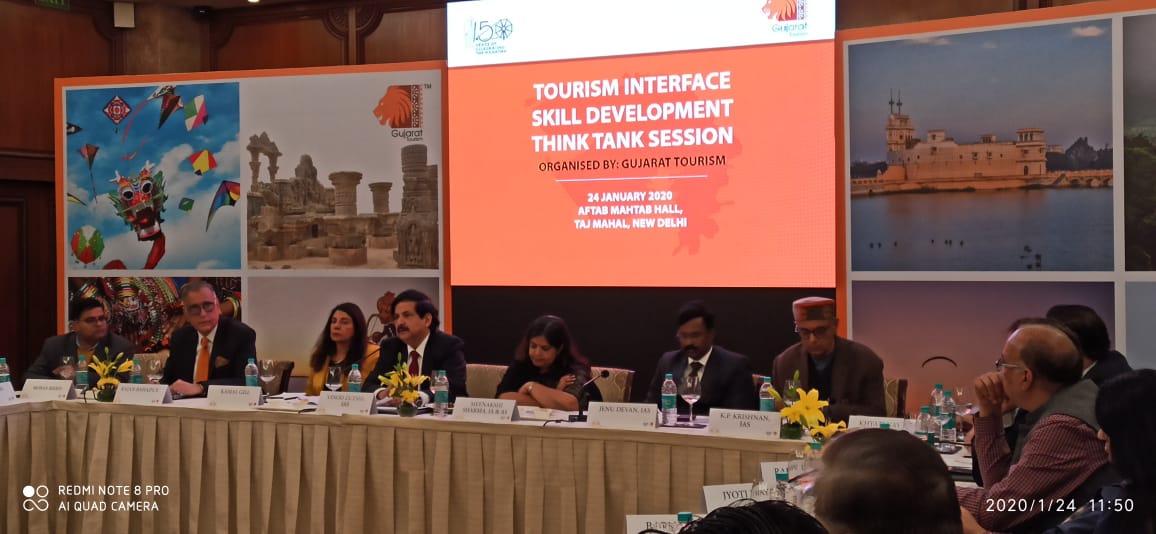
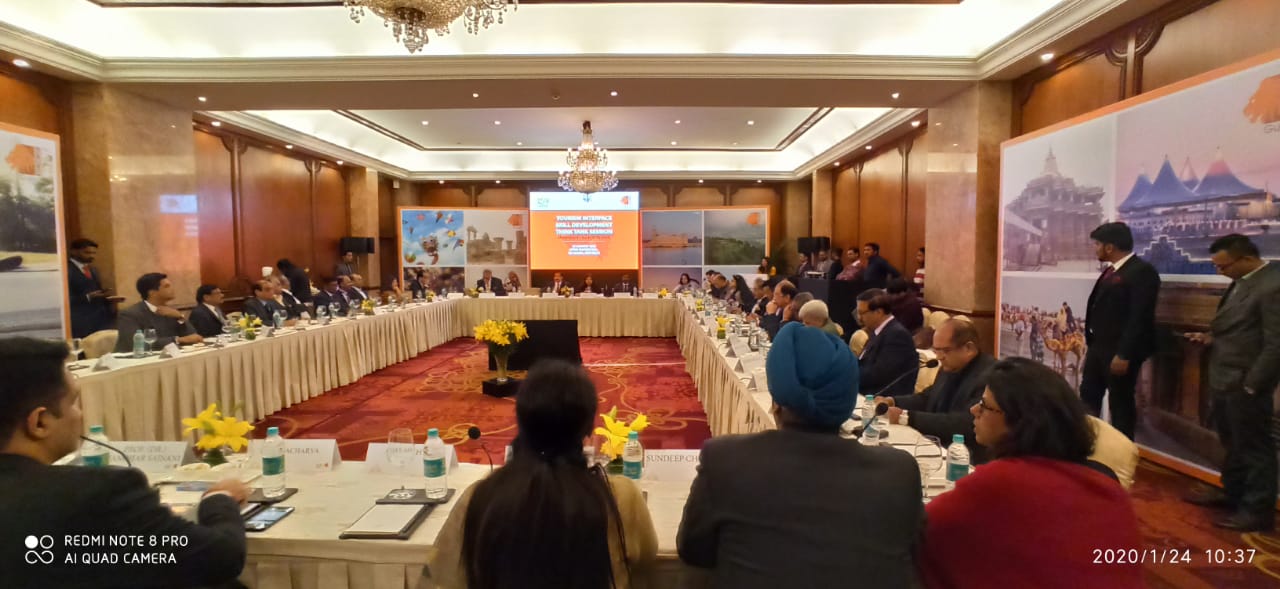
Tourism Interface Skill Development Think Session

Tourism industry is a tremendous employment generator, yet the industry in India faces the challenge of huge demand-supply gap in skilled manpower. Skill development being the most important segment to create jobs in tourism sector, the top most priority of India Tourism is to bridge the skill gap and create a pool of talented and quality human resource for tourism industry.

The task of skilling and capacity building for tourism sector has so far largely been undertaken by Tourism Ministry, State Governments and Academic Institutions. The setting up of Skill Development Ministry by Union Govt has been a laudable step and the National Skill Development Corporation (NSDC) and Tourism & Hospitality Sector Council (THSC), the two organisations under Skill Ministry are doing commendable job to address the issue of skill gap in tourism sector.

I heartily compliment Gujarat Tourism for bringing the issue of skill development to the centre stage, by organising ‘

’ in New Delhi on 24th Jan. The Think Tank session was one of its kind, in the sense that it brought a trilateral interface among the Government, Industry and Academia.

The ‘think tank’ deliberated on on-ground dynamics, and on designing & implementation of skill development for travel, tourism and hospitality sector. The participants also discussed the road map for improvement of employability in the tourism industry and to bring about a sustainable solution for maintaining the demand-supply balance of skilled human resource in tourism sector. The think tank also observed that:
• The Skill gap in tourism industry is a burning issue and all stakeholders in tourism sector of India should treat it as a National priority.
• There should be greater interface among Union Govt, State Govts, Tourism industry and Academic Institutions, to address the issue of bridging the skill gap and to raise talented and quality service providers.
• With a view to bringing nationwide integration of efforts and greater coordination, Ministry of Tourism should explore the possibility of constituting a National Task Force on Skill Development for Tourism.
• The trend set by Gujarat tourism for bringing greater focus on skill development should be emulated by all State Govts. and
• The Private sector stakeholders must play a more proactive role for producing skilled & talented human resource in tourism sector.

It was a pleasure to address and to be a Moderator at the Think Tank Session.


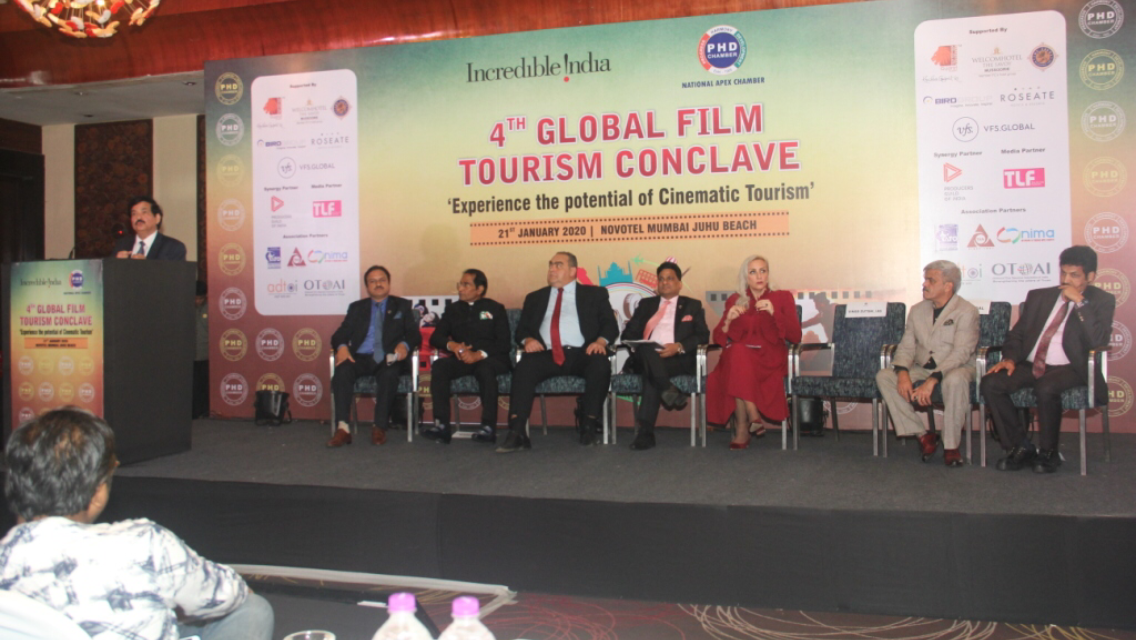
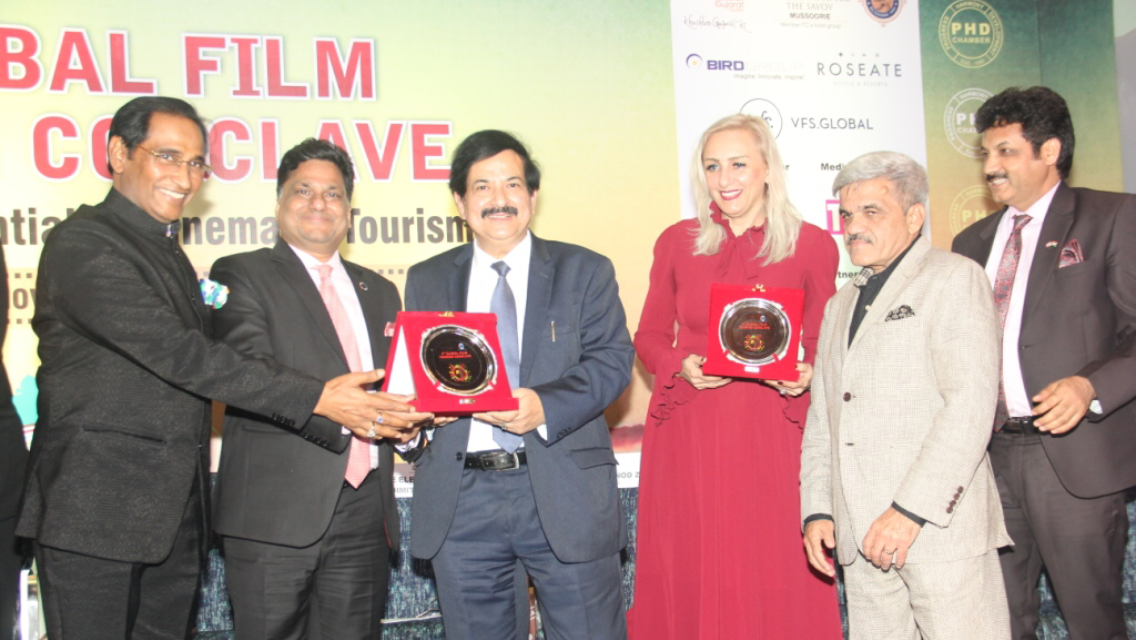
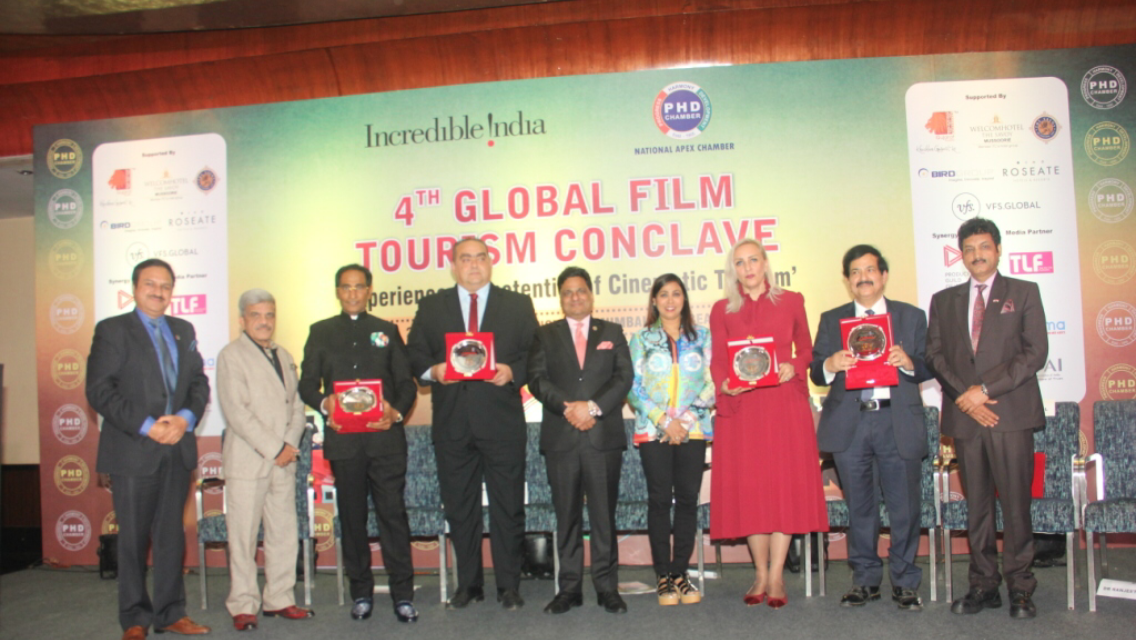
4th Edition of Global Film Tourism Conclave

Film Tourism is a strong USP of India Tourism. This is one vertical by which entertainment industry and travel industry, both are simultaneously benefitted. Studies have revealed that film tourism in India has a potential to attract 1 million ‘film tourists’ and to generate gross income of 3 billion USD by 2022.

India is blessed with a variety of destinations, suitable to all possible film scripts and stories. The country is the largest film producer in the world with around 2000 films produced every year. Further, with low cost facilities, skilled talent, world class post production capabilities and emerging infrastructure in the form of ‘film cities’, India has a distinct edge over its competitors in the world.

Lately, Union and State Governments, with their proactive role, have emerged as key drivers of film tourism in India. The formation of Film Facilitation Office (FFO) as part of National Film Development Corporation, under Ministry of I&B, has been a ‘game changer’. Today, FFO is actively involved in hand holding international film makers for getting permission for film production and for connecting them with Nodal Officers of every State Government / UT.

The efforts of Tourism Ministry in the past few years have been laudable. While Tourism Ministry is working hand-in-hand with I&B Ministry to energise the film and tourism industry, the draft new policy guidelines of Tourism Ministry promise to facilitate single window clearance, simplify processes, issue time bound clearances and incentivise film makers through a dedicated corpus fund.

The State Governments have not been far behind and have taken numerous policy and administrative initiatives to ease the business of making films and to provide incentives to domestic film makers.

A lot is being done in India by Govts, film & tourism industry to position India as an enviable film tourism destination, however, a lot needs to be done to meet the challenges faced by film industry. The delays for getting central clearances and location specific permissions have to be curbed and Standard Operating Procedures (SOPs) need to be framed to render uniformity in procedures throughout the country. Further, greater convergence between Central Ministries and State Governments, up-scaling the incentives vis-à-vis international competitors and augmenting promotion of film destinations are other essential action points.

The need of the hour is that all stakeholders related to film industry, tourism industry, Union Ministries and State Govts must jointly address these issues and work together to make India the global leader of Cinematic Tourism.

My compliments to PHD Chamber of Commerce & Industry for their commitment to promote film tourism in India by organising the in Mumbai.

It was a pleasure to participate and address at the Conclave.


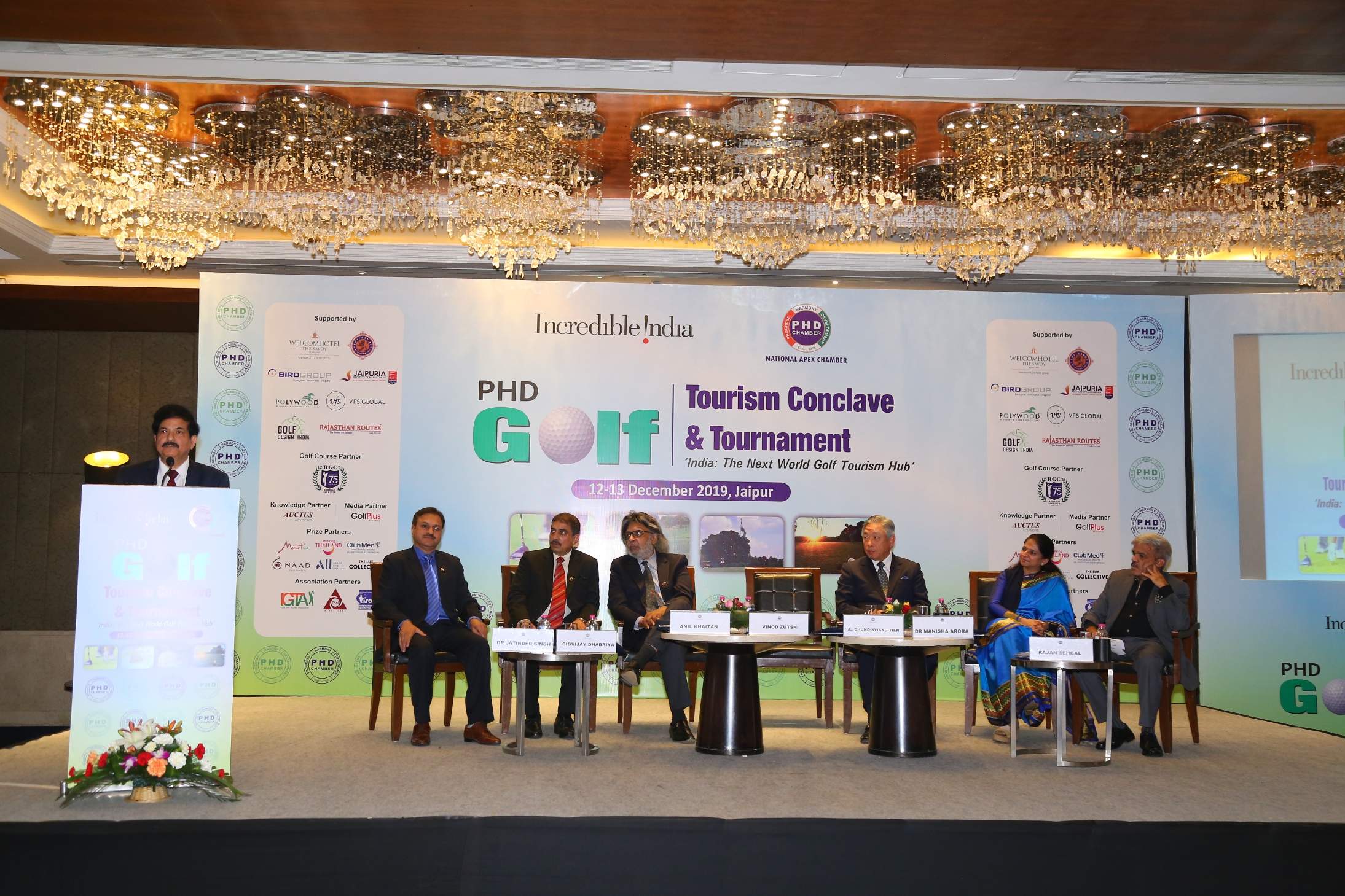
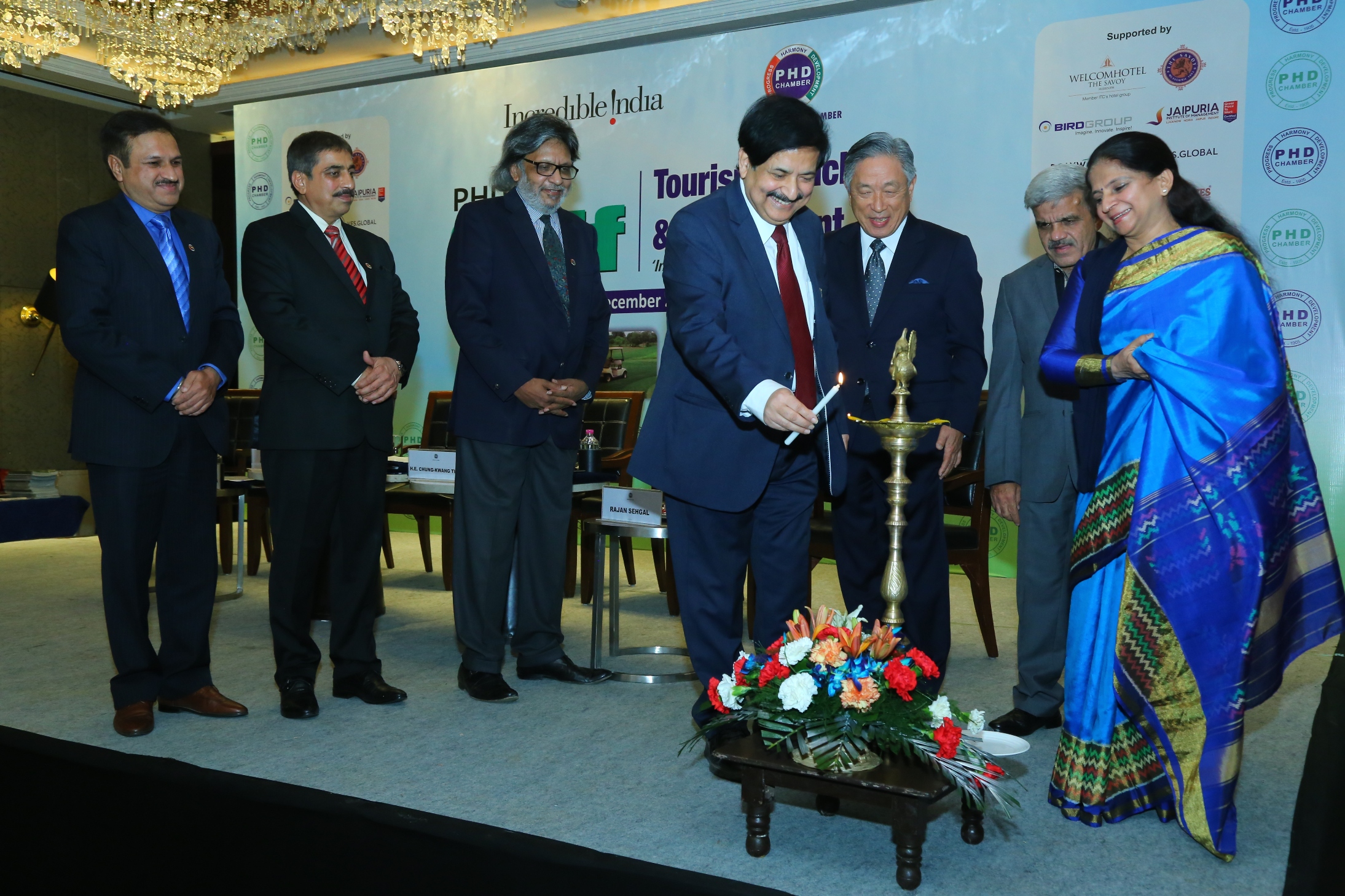
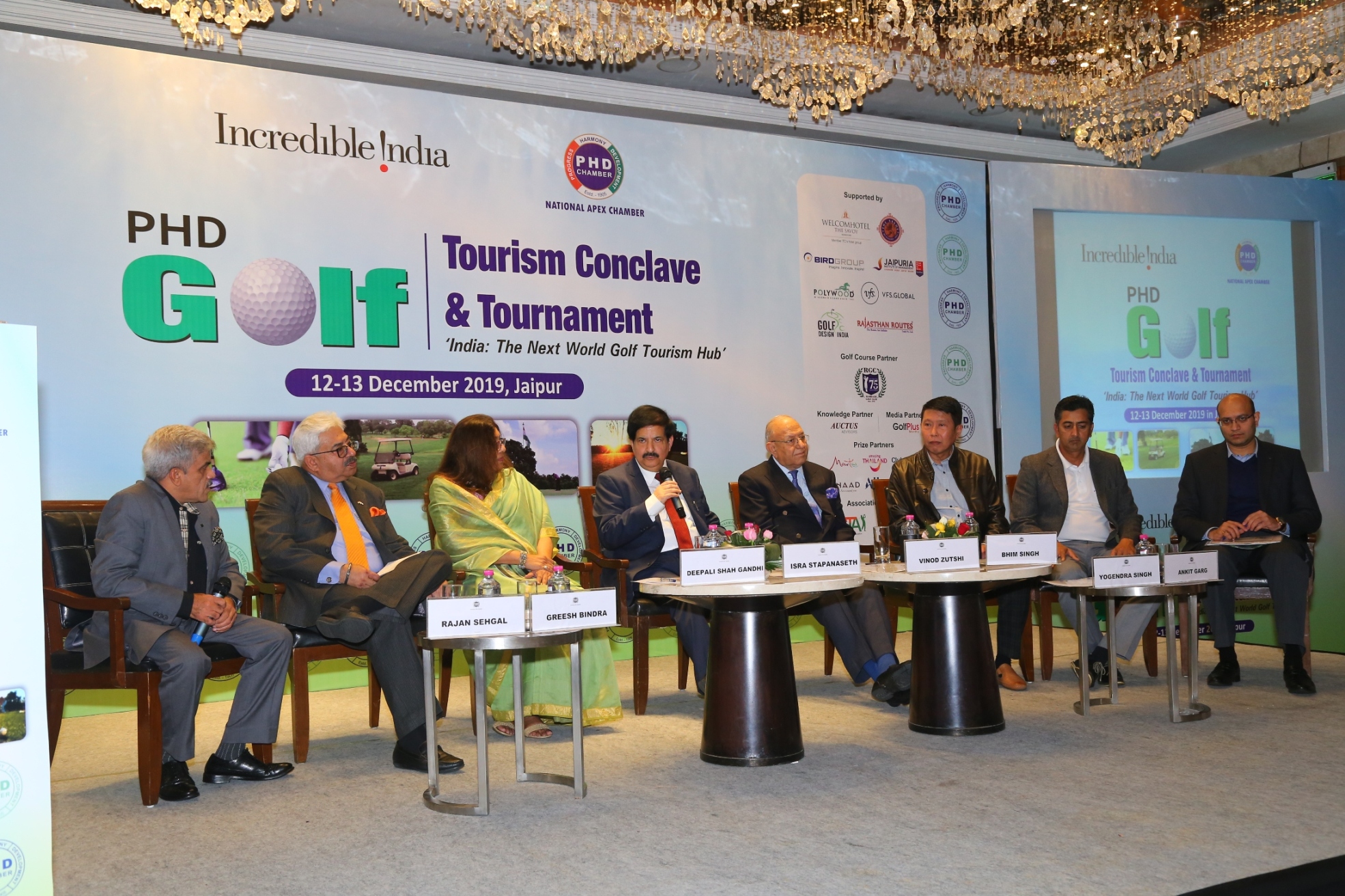
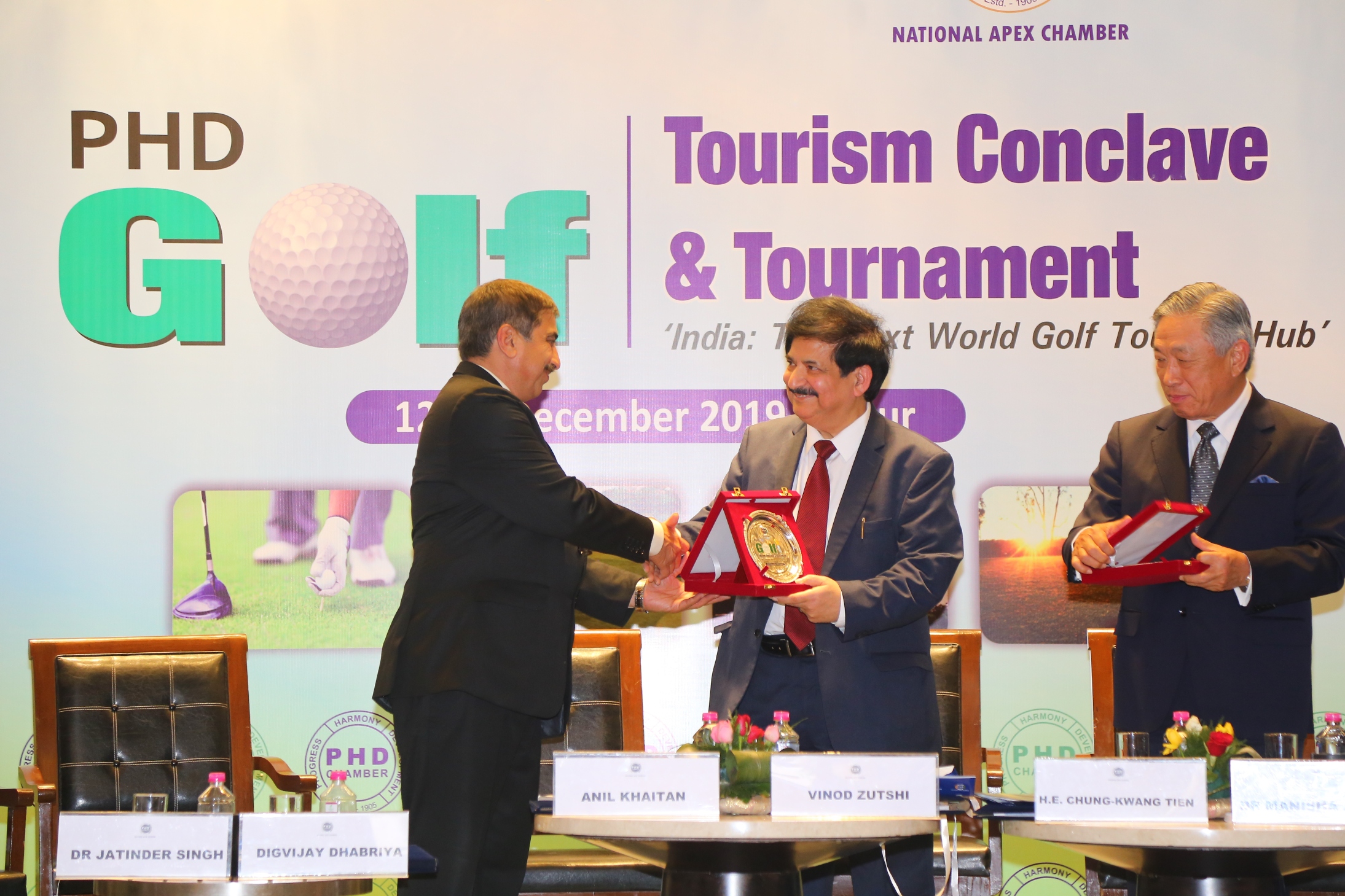
3rd edition of Golf Tourism Conclave and Tournament

Golf tourism is growing globally at an amazing rate of 12% annually. Golf brings in high spending tourists for a relatively longer duration of stay. Studies have revealed that 52% of travelling golfers take two or more golfing holidays in a year and spend 33% more on their holidays as compared to regular holiday makers.

India, with more than 250 golf courses including almost 25 signature golf courses, has great potential to be a major golf tourism hub in near future. India also has a great diversity in golfing. From desert plains to tea estates, to the hill stations and from traditional parkland to modern resort golf, the country can offer a great variety of golfing at different destinations and with a different feel & taste.

India also has a well defined and comprehensive golf tourism policy guidelines brought out by Tourism Ministry. With India Golf Tourism Committee (IGTC), as the nodal body to promote golf tourism, the guidelines also provide for financial assistance for holding domestic and international corporate golf events. The guidelines also have provisions for financial support for publicity and promotion; for organising workshops, events and seminars; for organising golf promotion, shows and exhibitions and for capacity building. The large revenue generating scheme of the Ministry provides financial support for developing golf courses by way of viability gap funding.

In order to give a boost to golf tourism in India, we need to:

• Create synergy amongst all stakeholders viz Union Govt, State Govts, Golf Service Providers and Tourism Industry.
• Increase access to the present golf courses and to work for creating ‘common-man golf courses’ particularly for domestic travellers in India.
• Popularize golf sport among India’s youth.
• Promote Public Private Partnership for creation and operations of golf courses and to offer greater incentives by way of land and water availability &
• Aggressively promote in major source countries namely USA, Japan, Europe, Canada and UK.

It is time that IGTC played more proactive role and expanded its role and functions, not only to provide financial support under Ministry’s guidelines but also to provide overall leadership to make India, the next world golf tourism hub.

I compliment PHD Chamber of Commerce for organising 3rd edition of Golf Tourism Conclave and Tournament at Jaipur.

 
Participated and addressed at the conclave.
 

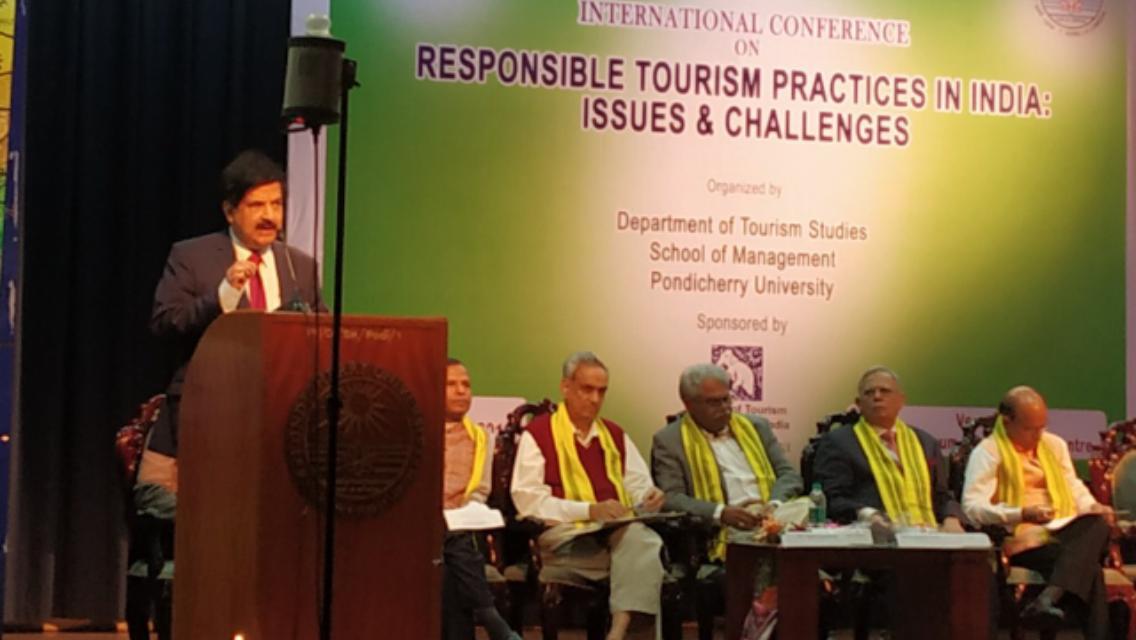
International Conference on ‘Responsible Tourism Practices in India

Travel is not a right, it is a privilege and it comes attached with certain responsibilities. ‘Responsible Tourism’ is not just how responsibly we all act and conduct ourselves while travelling, it is also a gateway to achieve sustainability in tourism.

Responsibility to sustain tourism is not confined only to the traveller, but also on the Government, Travel Trade organisations and the local community. All these stakeholders have to act responsibly in their own spheres to:
– safeguard the environment
– to pass on the economic benefit to local community and
– to protect the social structure & culture of the destination.

A Responsible Traveller:
• does not treat the world as his personal playground
• remembers that the place where he visits is a place where people live, work and follow local customs and culture
• ensures that the money that he spends preferably goes to a local rather than to an outsider
• treats travel as his personal journey and does not rate the success of his trip on the number of likes and comments &
• preferably travels to a destination in low season when there are fewer crowds and less strain on environment.

A Responsible Government:
• formulates policies to maximize social & economic benefits to the local communities, to conserve natural resources, to protect heritage and to sensitize people about Responsible Tourism.

A Responsible Travel Trade organisation:
• respects the ethics and principles of responsible tourism and follows the STCI norms in letter and spirit, and

A Responsible Local community:
• volunteers for sustained development of tourism and acts to preserve their cultural and social values and protect their economic interests.

Responsible tourism is a global responsibility and therefore every person in this world has to act responsibly.

Responsible tourism in India has started taking deeper roots, however, it is time that all stakeholders worked together and created an ‘Ecosystem of Responsible tourism’ in the Country.

It was my pleasure to participate and address at the International Conference on ‘Responsible Tourism Practices in India: Issues and Challenges’ organised by Pondicherry University at Puducherry.

It was also a pleasure to meet the Global Expert on Responsible Tourism Dr. Harold Goodwin, Emeritus Professor, IPM, Manchester Metropolitan University, UK.