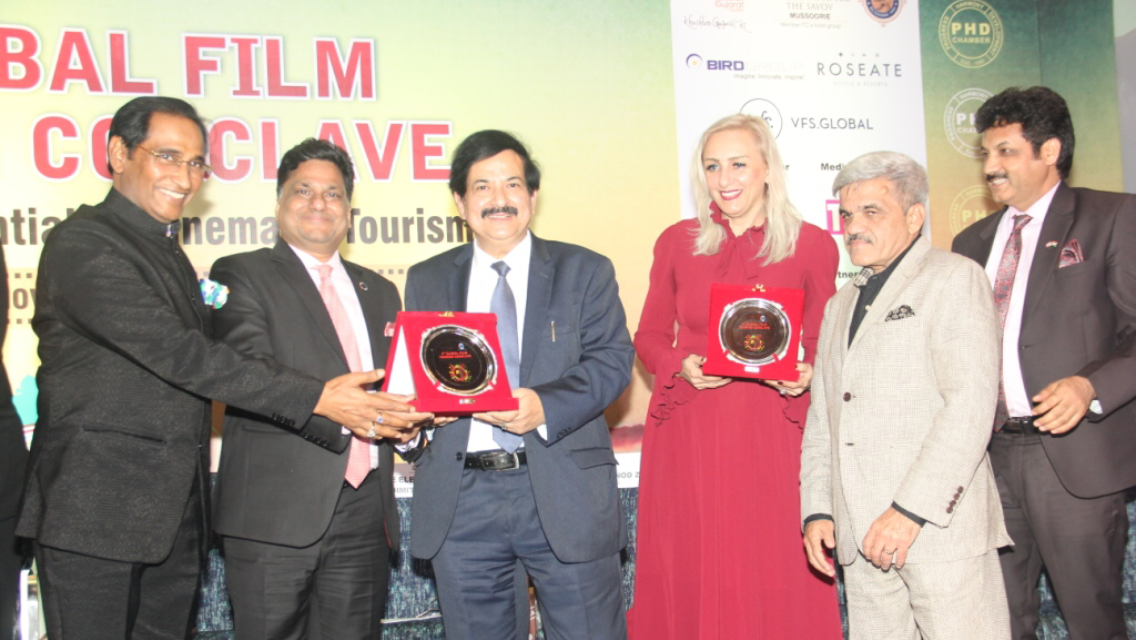
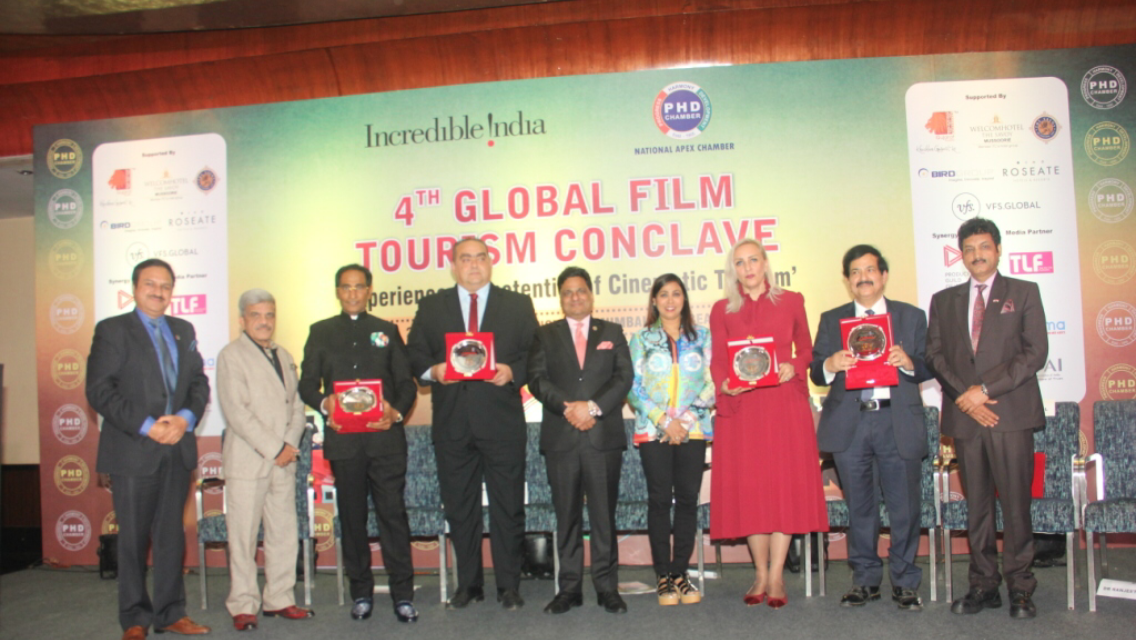
4th Edition of Global Film Tourism Conclave

Film Tourism is a strong USP of India Tourism. This is one vertical by which entertainment industry and travel industry, both are simultaneously benefitted. Studies have revealed that film tourism in India has a potential to attract 1 million ‘film tourists’ and to generate gross income of 3 billion USD by 2022.

India is blessed with a variety of destinations, suitable to all possible film scripts and stories. The country is the largest film producer in the world with around 2000 films produced every year. Further, with low cost facilities, skilled talent, world class post production capabilities and emerging infrastructure in the form of ‘film cities’, India has a distinct edge over its competitors in the world.

Lately, Union and State Governments, with their proactive role, have emerged as key drivers of film tourism in India. The formation of Film Facilitation Office (FFO) as part of National Film Development Corporation, under Ministry of I&B, has been a ‘game changer’. Today, FFO is actively involved in hand holding international film makers for getting permission for film production and for connecting them with Nodal Officers of every State Government / UT.

The efforts of Tourism Ministry in the past few years have been laudable. While Tourism Ministry is working hand-in-hand with I&B Ministry to energise the film and tourism industry, the draft new policy guidelines of Tourism Ministry promise to facilitate single window clearance, simplify processes, issue time bound clearances and incentivise film makers through a dedicated corpus fund.

The State Governments have not been far behind and have taken numerous policy and administrative initiatives to ease the business of making films and to provide incentives to domestic film makers.

A lot is being done in India by Govts, film & tourism industry to position India as an enviable film tourism destination, however, a lot needs to be done to meet the challenges faced by film industry. The delays for getting central clearances and location specific permissions have to be curbed and Standard Operating Procedures (SOPs) need to be framed to render uniformity in procedures throughout the country. Further, greater convergence between Central Ministries and State Governments, up-scaling the incentives vis-à-vis international competitors and augmenting promotion of film destinations are other essential action points.

The need of the hour is that all stakeholders related to film industry, tourism industry, Union Ministries and State Govts must jointly address these issues and work together to make India the global leader of Cinematic Tourism.

My compliments to PHD Chamber of Commerce & Industry for their commitment to promote film tourism in India by organising the in Mumbai.
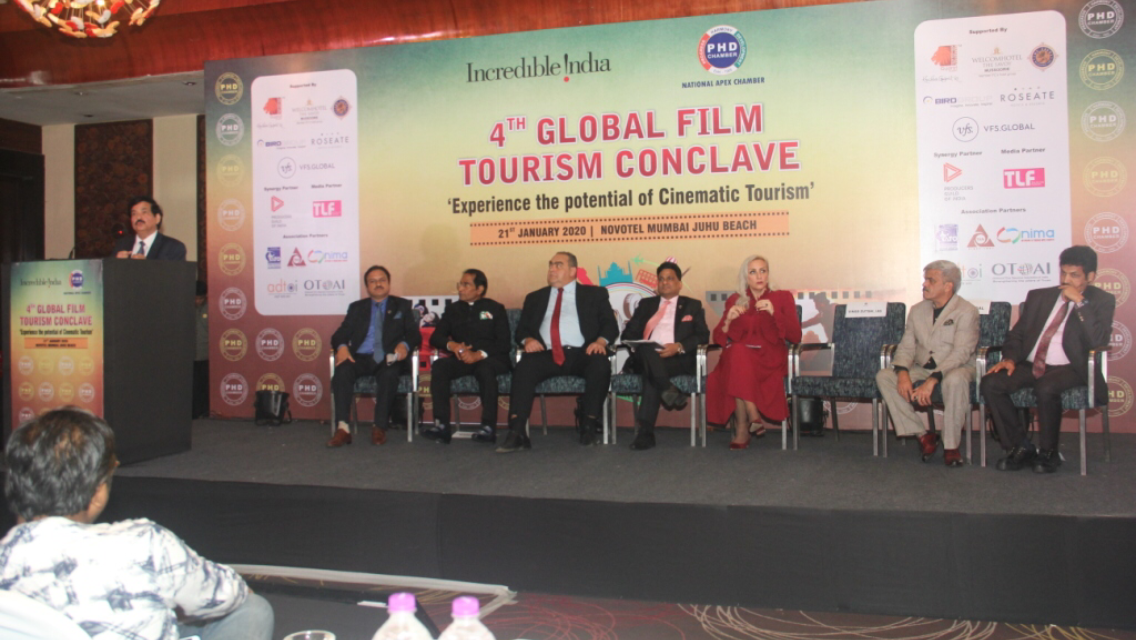
It was a pleasure to participate and address at the Conclave.


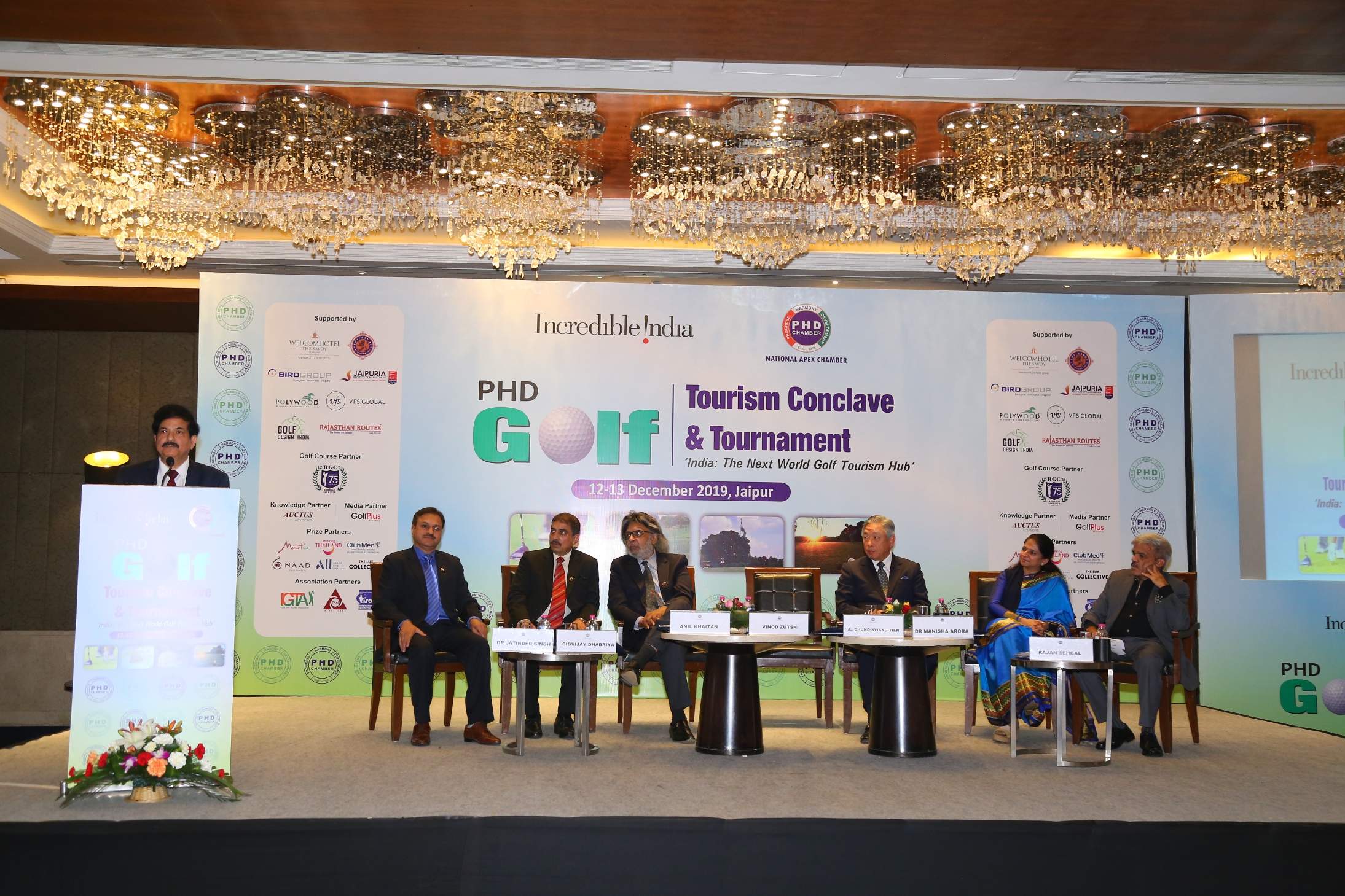
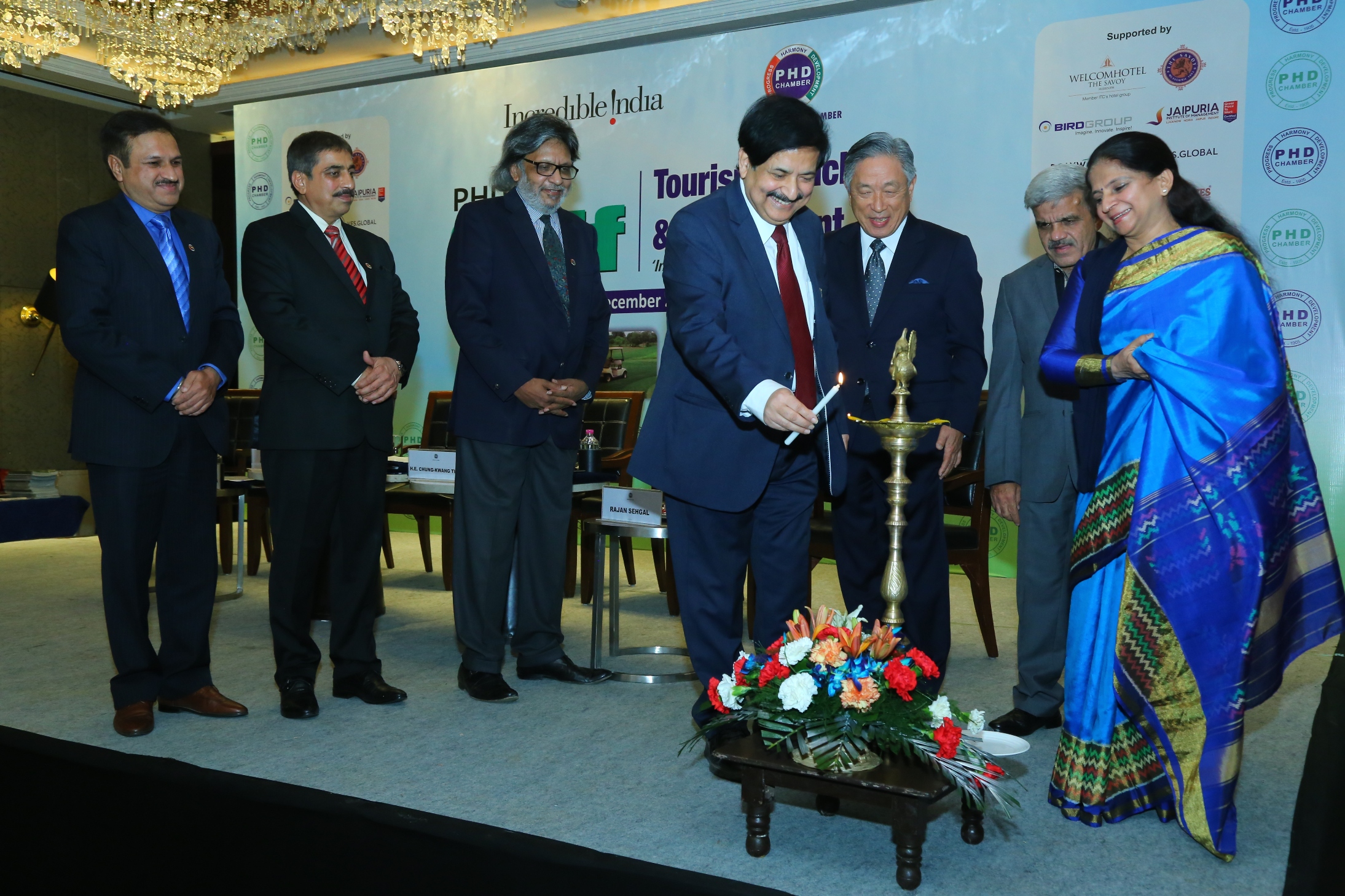
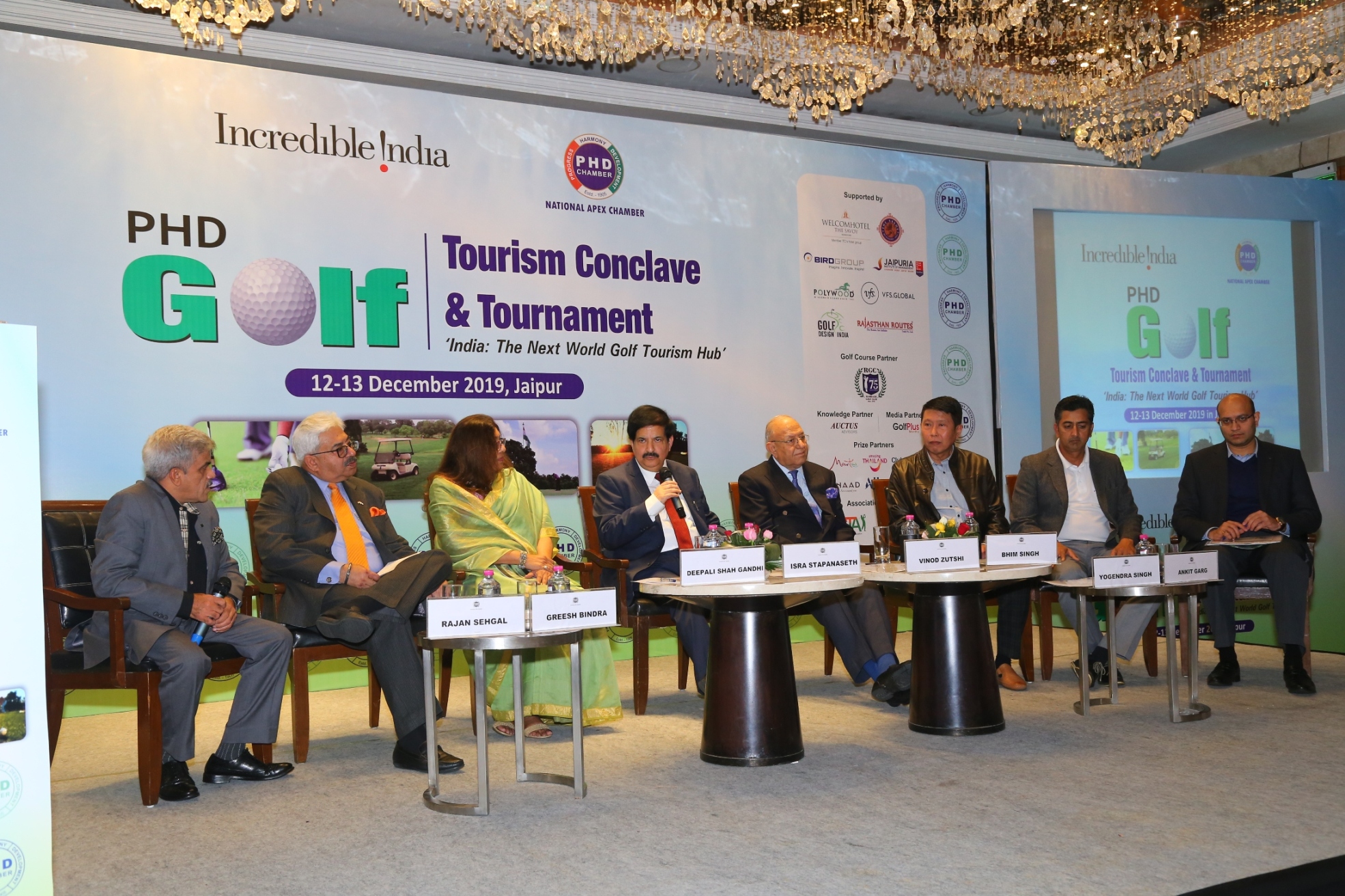
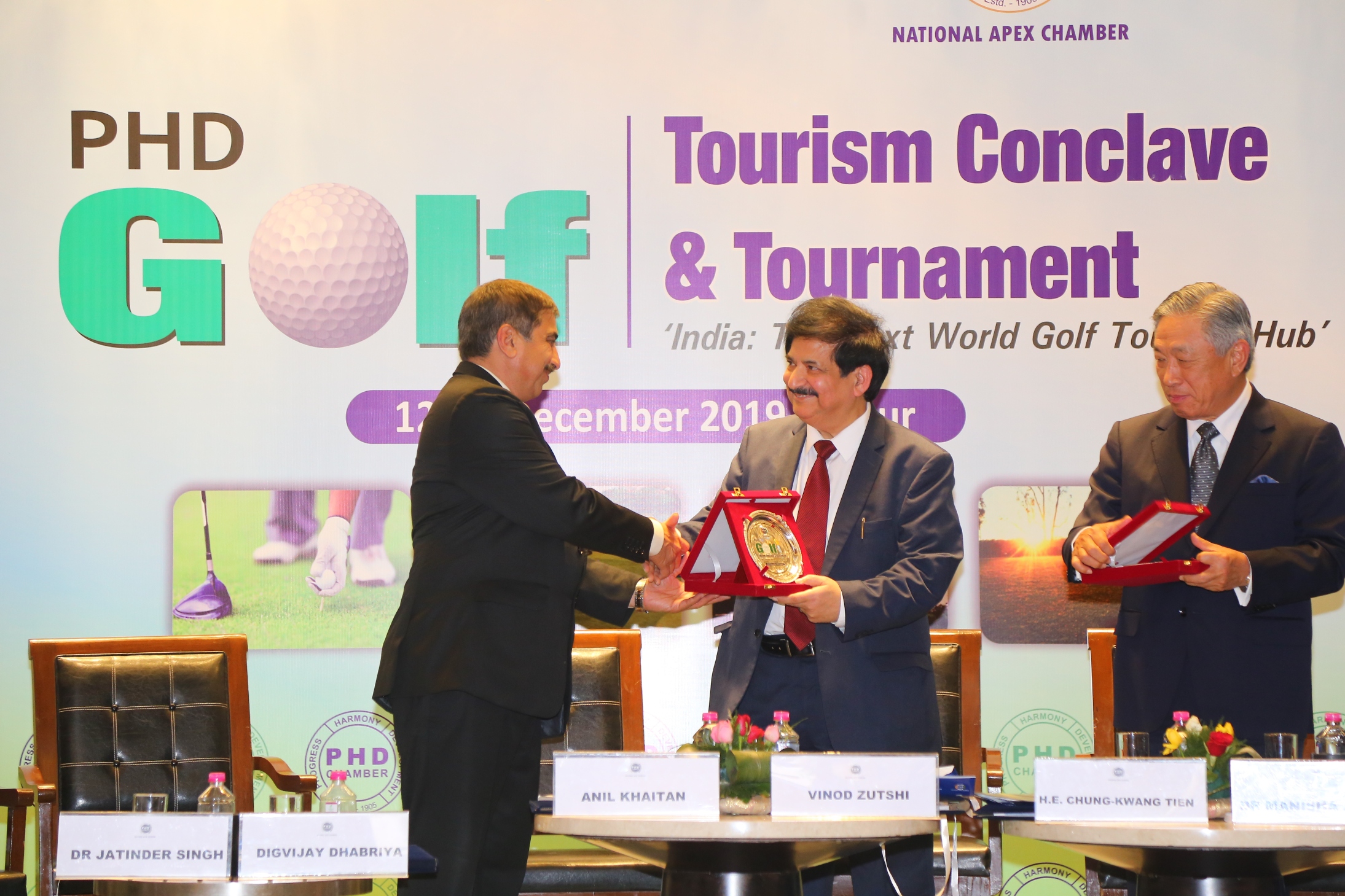
3rd edition of Golf Tourism Conclave and Tournament

Golf tourism is growing globally at an amazing rate of 12% annually. Golf brings in high spending tourists for a relatively longer duration of stay. Studies have revealed that 52% of travelling golfers take two or more golfing holidays in a year and spend 33% more on their holidays as compared to regular holiday makers.

India, with more than 250 golf courses including almost 25 signature golf courses, has great potential to be a major golf tourism hub in near future. India also has a great diversity in golfing. From desert plains to tea estates, to the hill stations and from traditional parkland to modern resort golf, the country can offer a great variety of golfing at different destinations and with a different feel & taste.

India also has a well defined and comprehensive golf tourism policy guidelines brought out by Tourism Ministry. With India Golf Tourism Committee (IGTC), as the nodal body to promote golf tourism, the guidelines also provide for financial assistance for holding domestic and international corporate golf events. The guidelines also have provisions for financial support for publicity and promotion; for organising workshops, events and seminars; for organising golf promotion, shows and exhibitions and for capacity building. The large revenue generating scheme of the Ministry provides financial support for developing golf courses by way of viability gap funding.

In order to give a boost to golf tourism in India, we need to:

• Create synergy amongst all stakeholders viz Union Govt, State Govts, Golf Service Providers and Tourism Industry.
• Increase access to the present golf courses and to work for creating ‘common-man golf courses’ particularly for domestic travellers in India.
• Popularize golf sport among India’s youth.
• Promote Public Private Partnership for creation and operations of golf courses and to offer greater incentives by way of land and water availability &
• Aggressively promote in major source countries namely USA, Japan, Europe, Canada and UK.

It is time that IGTC played more proactive role and expanded its role and functions, not only to provide financial support under Ministry’s guidelines but also to provide overall leadership to make India, the next world golf tourism hub.

I compliment PHD Chamber of Commerce for organising 3rd edition of Golf Tourism Conclave and Tournament at Jaipur.

 
Participated and addressed at the conclave.
 

International Conference on ‘Responsible Tourism Practices in India

Travel is not a right, it is a privilege and it comes attached with certain responsibilities. ‘Responsible Tourism’ is not just how responsibly we all act and conduct ourselves while travelling, it is also a gateway to achieve sustainability in tourism.

Responsibility to sustain tourism is not confined only to the traveller, but also on the Government, Travel Trade organisations and the local community. All these stakeholders have to act responsibly in their own spheres to:
– safeguard the environment
– to pass on the economic benefit to local community and
– to protect the social structure & culture of the destination.

A Responsible Traveller:
• does not treat the world as his personal playground
• remembers that the place where he visits is a place where people live, work and follow local customs and culture
• ensures that the money that he spends preferably goes to a local rather than to an outsider
• treats travel as his personal journey and does not rate the success of his trip on the number of likes and comments &
• preferably travels to a destination in low season when there are fewer crowds and less strain on environment.

A Responsible Government:
• formulates policies to maximize social & economic benefits to the local communities, to conserve natural resources, to protect heritage and to sensitize people about Responsible Tourism.

A Responsible Travel Trade organisation:
• respects the ethics and principles of responsible tourism and follows the STCI norms in letter and spirit, and

A Responsible Local community:
• volunteers for sustained development of tourism and acts to preserve their cultural and social values and protect their economic interests.

Responsible tourism is a global responsibility and therefore every person in this world has to act responsibly.

Responsible tourism in India has started taking deeper roots, however, it is time that all stakeholders worked together and created an ‘Ecosystem of Responsible tourism’ in the Country.

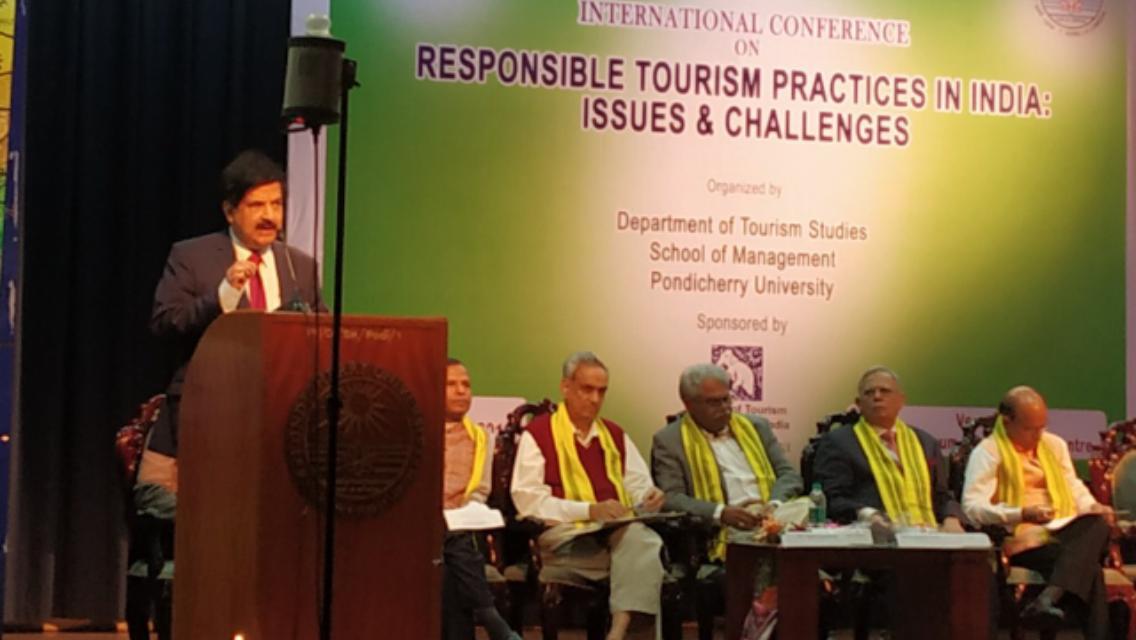
It was my pleasure to participate and address at the International Conference on ‘Responsible Tourism Practices in India: Issues and Challenges’ organised by Pondicherry University at Puducherry.

It was also a pleasure to meet the Global Expert on Responsible Tourism Dr. Harold Goodwin, Emeritus Professor, IPM, Manchester Metropolitan University, UK.

2nd International Buddhist Travel Mart (IBTM) & Convention

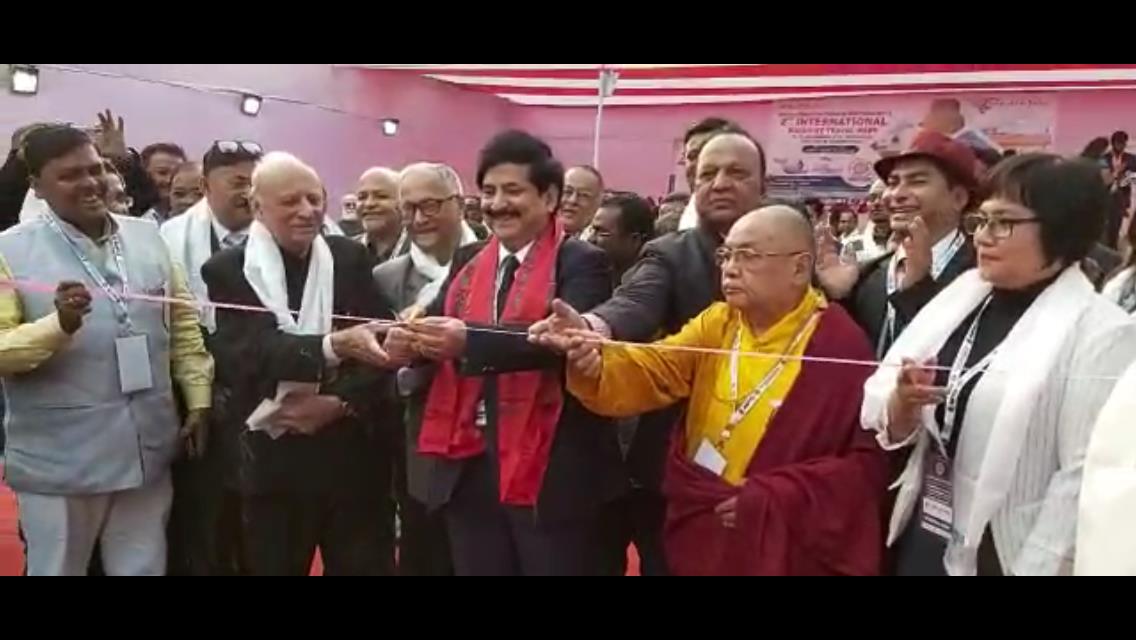
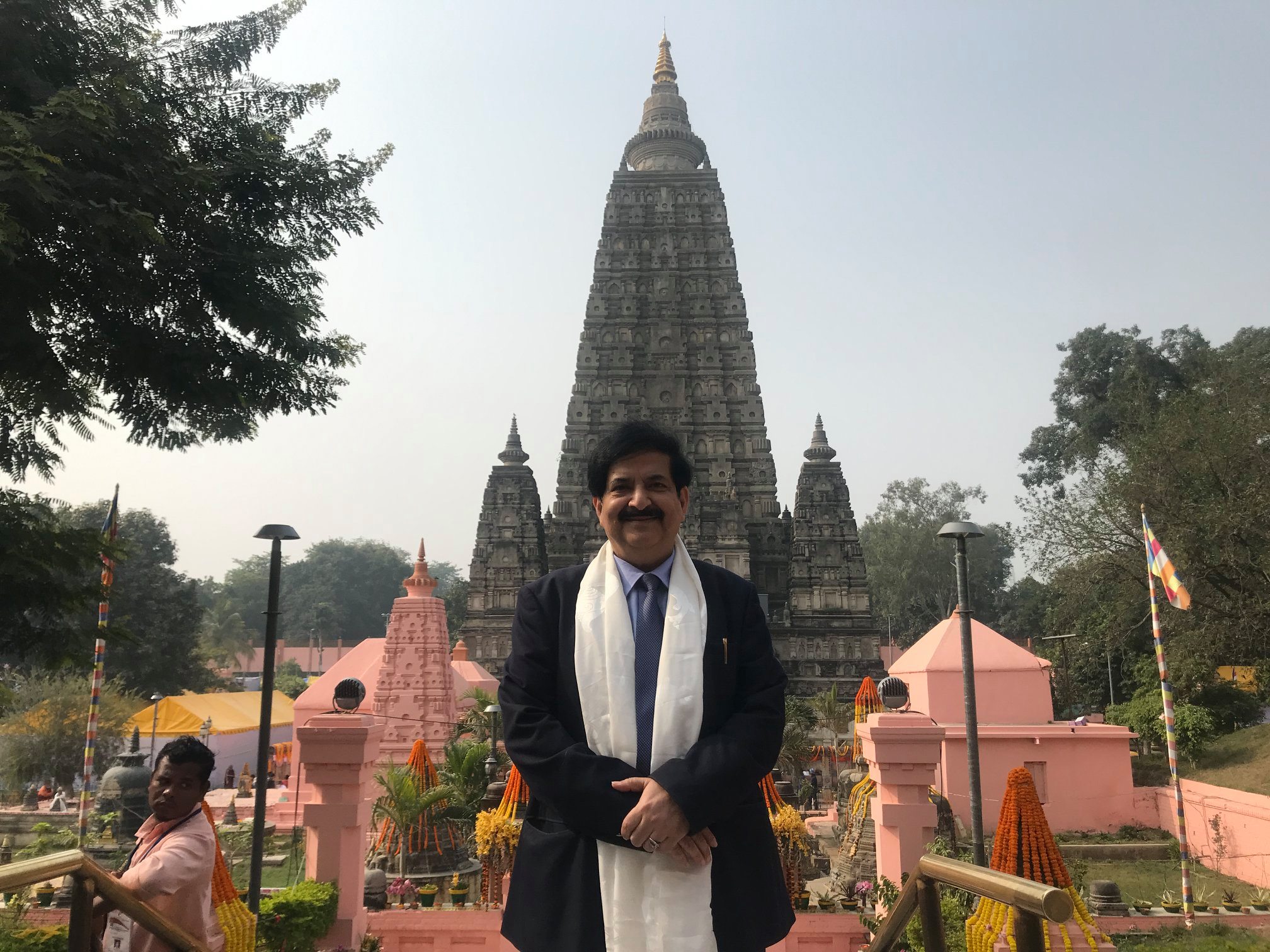
I was delighted to participate and address at the 2nd International Buddhist Travel Mart(IBTM) & Convention, organised by Association of Buddhist Tour Operators (ABTO) at Bodhgaya on 10-12 dec.Supported by Ministry of Tourism and partnered by various International Tourism Organisations namely NATTA,FATA,International Buddhist Confederation,ATTA,ABTO-Bhutan,TOAB and Asoka Mission, the event was one of the largest congregations of delegates from 17 countries including Malaysia,Indonesia, Srilanka, Nepal, Bangla desh, Bhutan, Vietnam, Taiwan and Thailand, committed to Buddhist Tourism in India and the Asian Subcontinent.
IBTM proved to be an Excellent platform to showcase the Buddha Trail of India and to reinforce the fact ,to the world ,that India is the ‘Land of Buddha’
Buddhism is not just a religion but also a philosophy where teachings and values are affecting the cultural lives of people across the world. Buddhist Tourism is therefore of immense value to India not only from pilgrimage point of view, by attracting Buddhist travellers but also for its Heritage , Spiritual and Educational value, which can attract the Non- Buddhist International travellers from all over the globe.
Buddhist Tourism has no national boundaries and goes beyond Indian Buddhist Circuit. While Lumbini in Nepal, is of great importance , being the birth place of Lord Buddha, the spread of Buddha heritage has been far and wide in Asian Subcontinent. There is therefore a necessity of promoting Trans Border Buddhist tourism. A ‘Regional Buddhist Circuit’ with India as the focal centre and comprising SAARC and ASEAN countries could help in creating a regional hub of Buddhist tourism to attract travellers from rest of the world.

I also availed the opportunity of visiting the Sacred Mahabodhi Temple and offer prayers.

NEW INDIA – NEW LADAKH

Ladakh is the most crowned desert which has an array of natural wonders in the form of mountain passes, monasteries, lucid lakes and valleys. Ladakh is a place where you can script your adventures and soak in the sweeping vistas of powdery snow, barren lands and turquoise lakes.

Ladakh is also an ‘Unexplored Paradise’ with a distinct uniqueness, that cannot be found anywhere on this planet

The newly acquired Union Territory status has opened the doors for innumerable opportunities for expanding Tourism and cultural activities in the region. The new status of Ladakh will provide a great platform for tourism to prosper as there will be greater coordination with the Centre, more resources, and greater support from agencies and stake holders of tourism industry.

The need of the hour is that Ladakh has to be showcased and aggressively promoted, in the right perspective ,before the domestic and international travellers and to enable Ladakh to offer ‘Quality Tourism ‘and make it one of the best tourism destinations in the World.

Ministry of Tourism has already announced its resolve and plans to support tourism in Ladakh through capacity building, creating awareness, supporting bed and breakfast scheme to tide away the shortage of hotels and promoting Adventure sports.

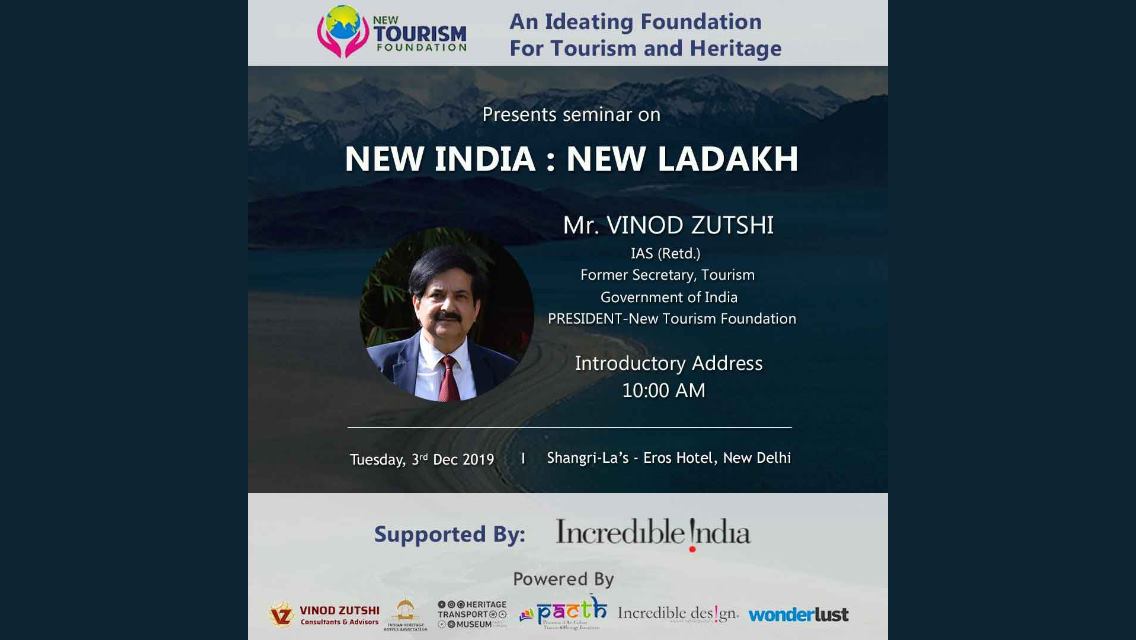
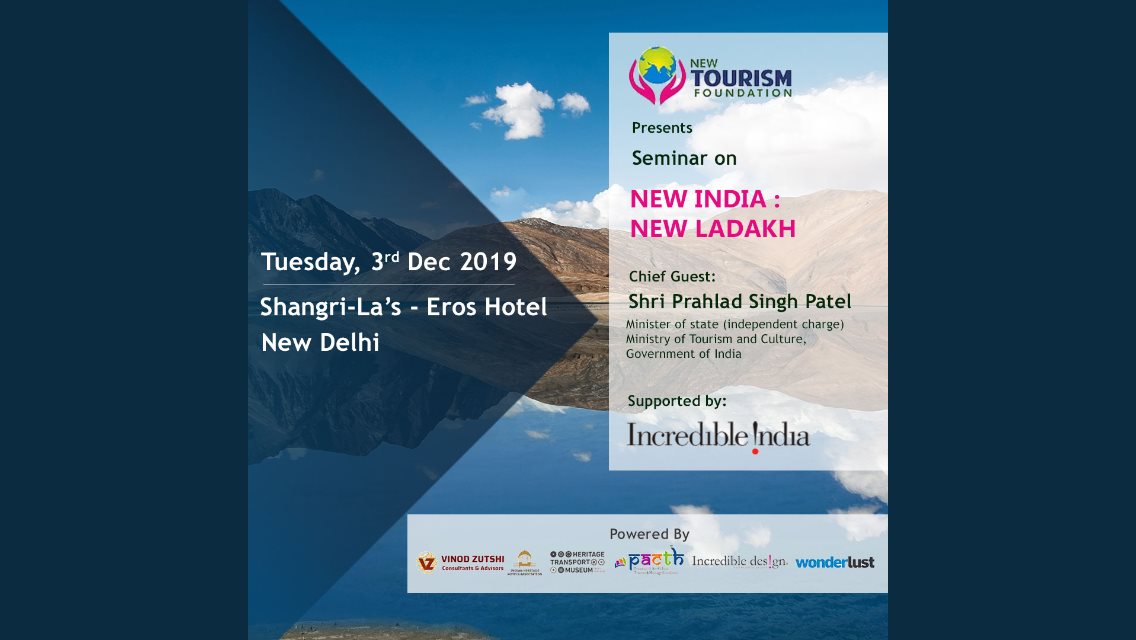
‘New India-New Ladakh’ Seminar, organised by NEW TOURISM FOUNDATION , on 3rd dec, is an effort to bring all Stakeholders on a common platform and to deliberate to showcase Ladakh before the world in a more aggressive manner, to promote this unique destination and to build a road map for bringing Quality Tourism and Sustained Tourism in Ladakh.

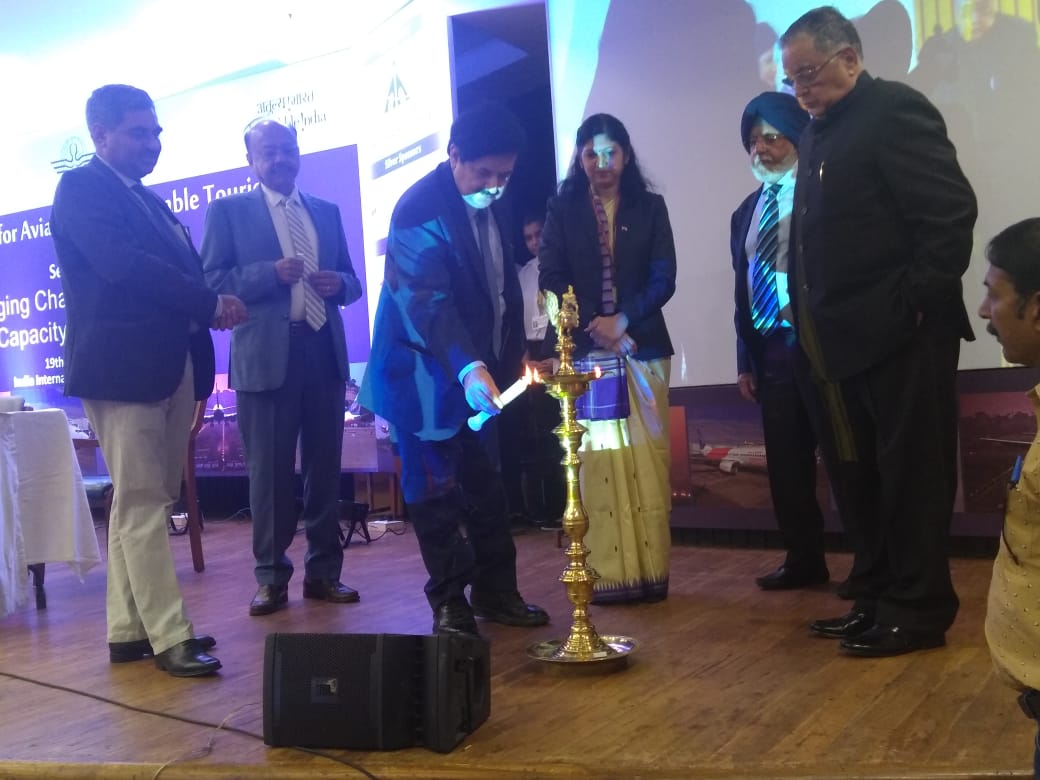
Emerging Challenges in Aviation

Connectivity and tourism are intricately related to each other. The better the connectivity, the better the tourism. Even the reverse is true. The more the tourism, the more the demand for connectivity. Further, seamless travelling and multi modal transportation are the needs of the hour, to position India as a world class tourism destination. Therefore, in order to have a sustained growth of tourism in the country, the decade long, high aviation growth trajectory achieved by India, must continue for the next decade as well.

India’s Aviation Sector today, has a number of Strengths, in the form of world class airports, low cost airlines, expanding fleet of aircrafts and emerging regional airports.

India has a large number of Opportunities too. The new aviation policy, regional connectivity scheme, liberalised e-visa regime and success stories of public-private partnership model in airport infrastructure, have been game changers. These would continue to pave way for high growth in future. With Asia-Pacific Region, projected to drive the biggest aviation growth in the next 20 years, India has the opportunity to become a Global Aviation Hub in this region.

The growing opportunities are however accompanied with challenges. The viability of airlines, the high aviation fuel and airport costs and the crowding of air space and airports at some of the key destinations, are some of the major challenges before the aviation sector in the country.

In order to meet these challenges, the issues of air infrastructure, capacity building and mid course corrections in tax structure and costs, must be addressed by Government, Aviation industry and all other Stakeholders, sooner than later.

The high growth of aviation sector in India must be accompanied with its sustainability.

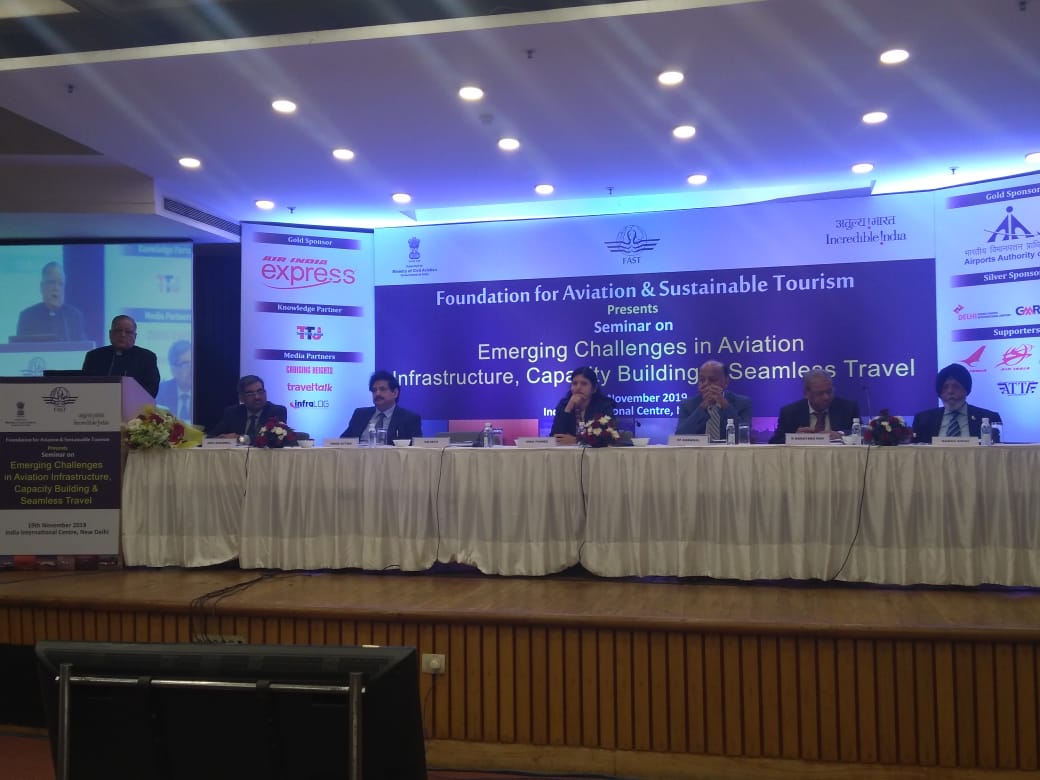
Addressed the seminar on ‘Emerging Challenges in Aviation’ organised by Foundation for Aviation & Sustainable Tourism (FAST) at IIC, New Delhi.

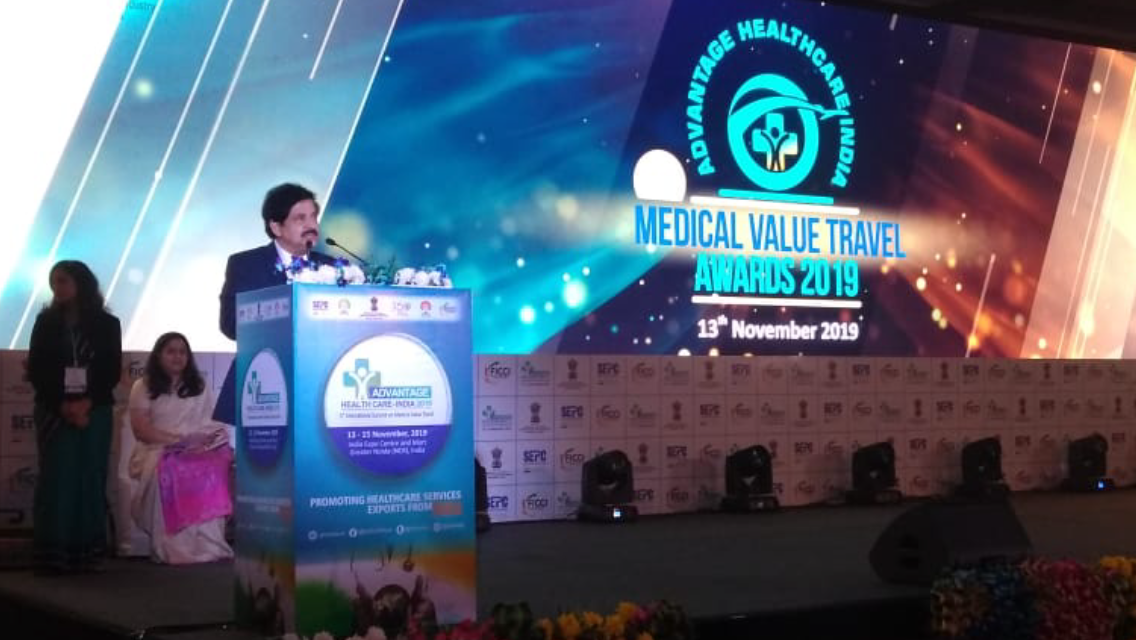
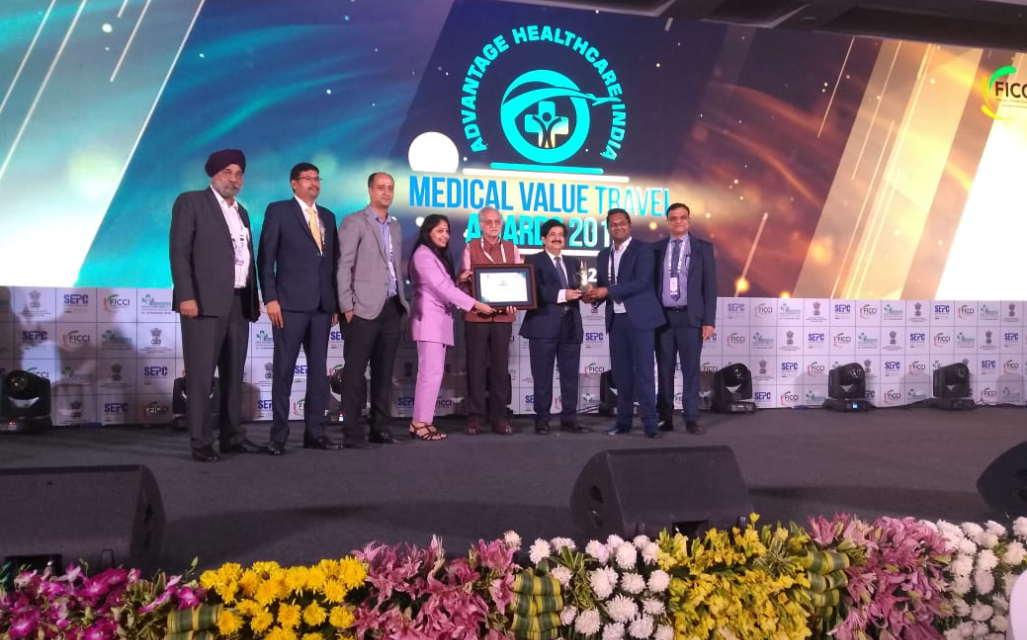
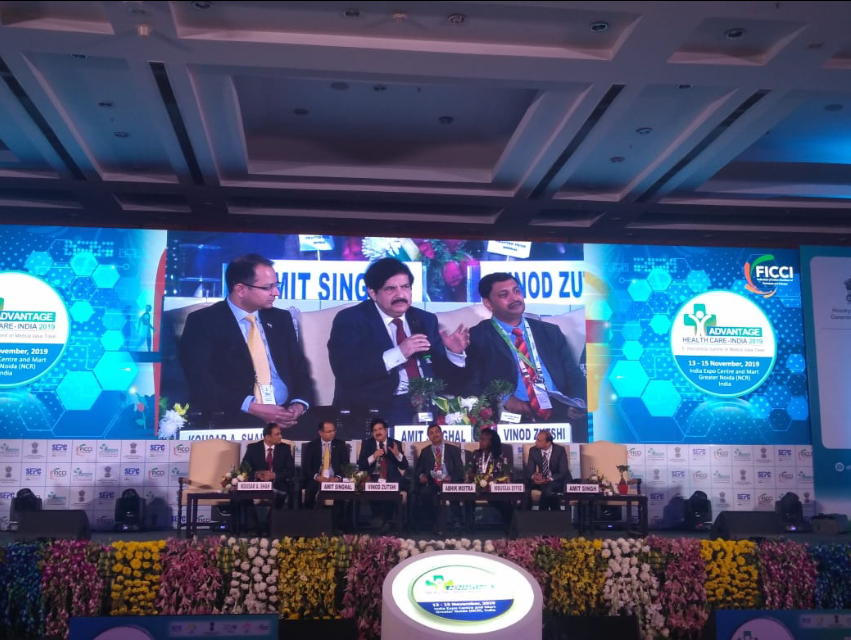
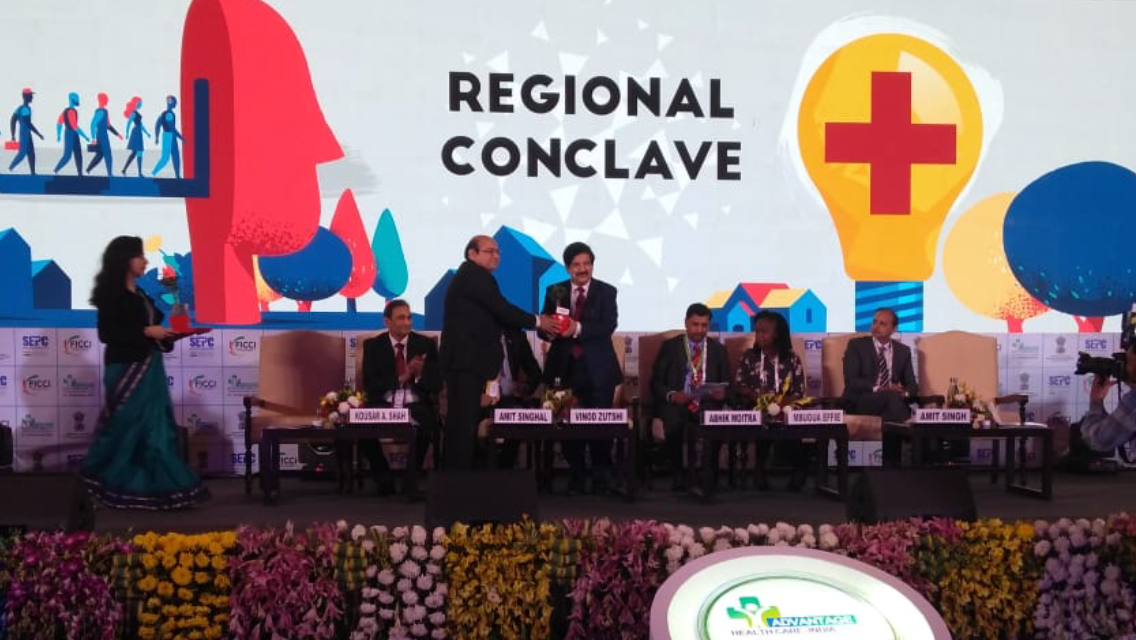
FICCI Medical Value Travel Awards 2019

I compliment FICCI for organising the 5th edition of Advantage Health Care India and 3rd edition of FICCI Medical Value Travel Awards 2019 in collaboration with Ministry of Commerce & Industry.

FICCI has the distinction of being the only national level chamber having instituted Awards in the medical tourism vertical. The Awards aim at honouring the efforts and dedication of members of the industry who are doing inspirational work in the sphere of clinical specialities, Ayurveda, Wellness and facilitation of international patients and to motivate larger number of healthcare providers and individuals to achieve excellence in their field.

Today, India is one of the top ten medical tourism destinations in the world. Modern healthcare facilities, skilled doctors, less waiting time, low cost of treatment and India being an incredible tourism destination, all of these factors have made India a popular hub of medical tourism. India’s medical value travel revenue recorded 3 billion USD in 2015 and received 5 lakh medical travellers during the year 2017. With an estimated growth rate around 20% over the next two years, India’s medical tourism industry is expected to be worth 9 billion USD by the year 2020.

Bangladesh and Afghanistan are currently the two top countries from where maximum number of medical tourists arrive. Other source countries from where large number of medical tourists come to India include, Iraq, Oman, Maldives, Yemen, Uzbekistan, Sudan, Kenya, Nigeria, Tanzania and Saudi Arabia.

It was a pleasure to be part of Jury, to address the august gathering and to give away the awards at the glittering MVT Awards 2019 event.

Also Chaired the Regional Conclave session, primarily focused on building Government to Government efforts in boosting the medical value travel sector.


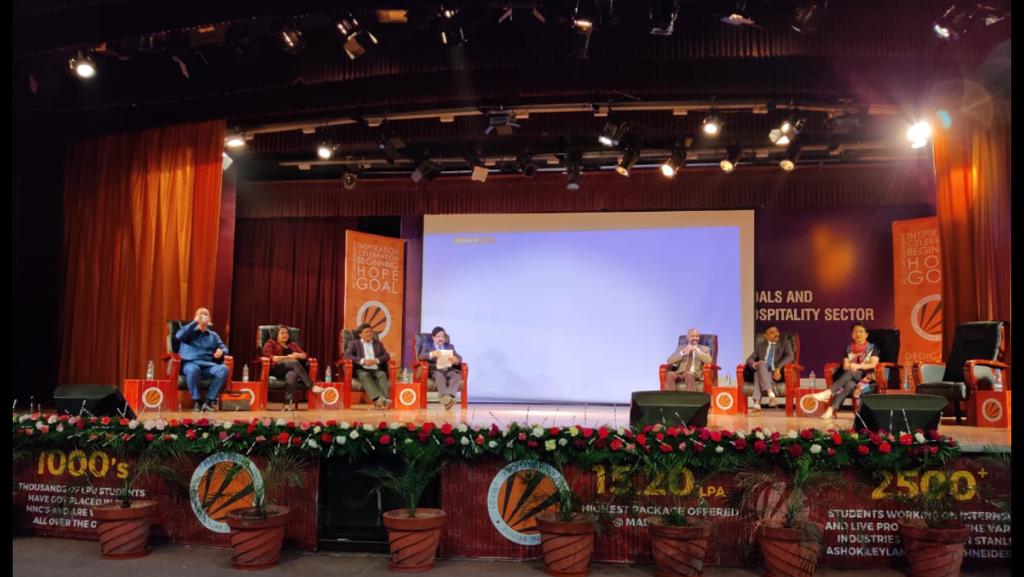
Sustainable Development Goals and Management Practices in Tourism & Hospitality Sector.

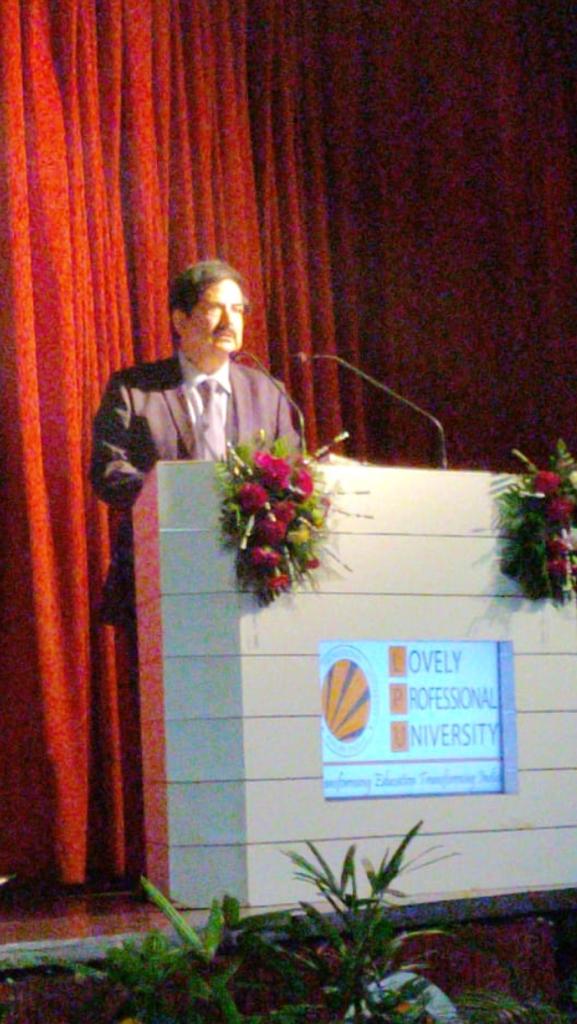
It was a pleasure to participate and speak at Lovely Professional University, Jalandhar during the International Conference, on one of the most-discussed subjects “Sustainable Development Goals and Management Practices in Tourism & Hospitality Sector”.

It was also a matter of great pleasure for me to visit an Indian University, which is considered to be having one of the biggest and best infrastructure in the World.

The reason why the whole world is talking about Sustainability in Tourism, and the reason why most of the 17 Sustainable Development Goals (SDGs) enunciated in UN’s 2030 agenda, refer to travel & tourism, is because the world has accepted its virtues and considers tourism as:

  • A pillar of economies.
  • A major engine of economic growth.
  • As pro-poor, inclusive and one of the biggest employment generators and
  • A key element for sustainable development of economies.

This point is validated by the fact that, globally, travel & tourism is today a 7.6 trillion Dollars industry; provides more than 300 million jobs; contributes 10.2% in global GDP and today 1.6 billion people are travelling every year all over the globe.
Sustainable Tourism is therefore the only alternative and optimal choice to enjoy the benefits and virtues of tourism, for all times to come, and to pass on to future generations. The onus of Sustainable Tourism, however, lies on each of us.

Governments must formulate new policies, make policy corrections and take bold initiatives to maximize social and economic benefits to the local communities; conserve natural resources; protect heritage and bring in awareness in a campaign mode.

The travel & tourism industry must follow the guidelines and indicators of Sustainable Tourism Criteria of India (STCI) based on Global Sustainable Tourism Criteria (GSTC).

The hospitality sector must also follow the guidelines of Tourism Ministry to bring about eco-friendly practices such as rain water harvesting, waste management, sewage treatment, pollution control and energy conservation methods.

The host community must volunteer to participate in development of tourism in their area and to seek employment.

The Academia has to be proactive in creating awareness among students, sensitizing the faculty and bring in necessary inclusions in the curriculum.

And finally, the individual traveller has to act responsibly.

TRAVEL, ENJOY AND RESPECT, the slogan of UNWTO must be followed by all in letter and spirit.


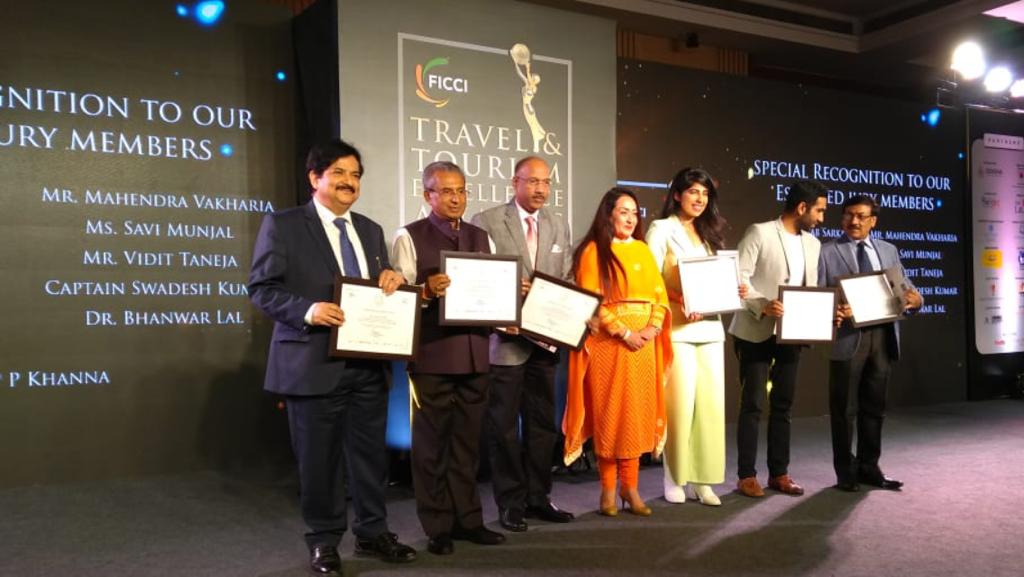
FICCI Awards 2019.

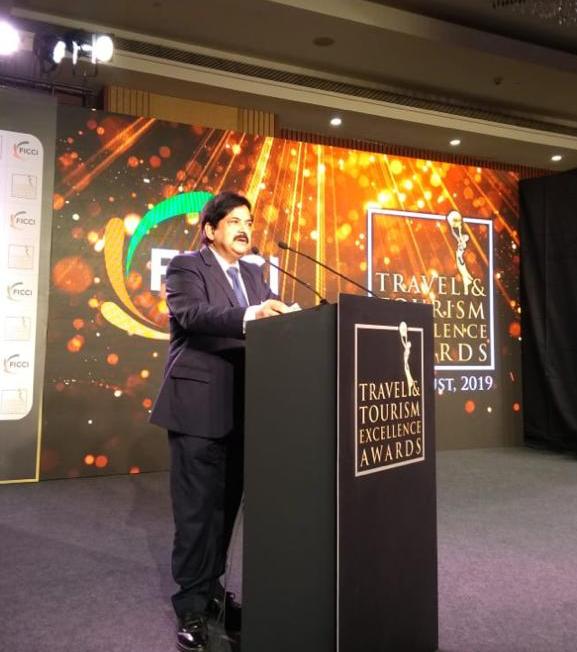
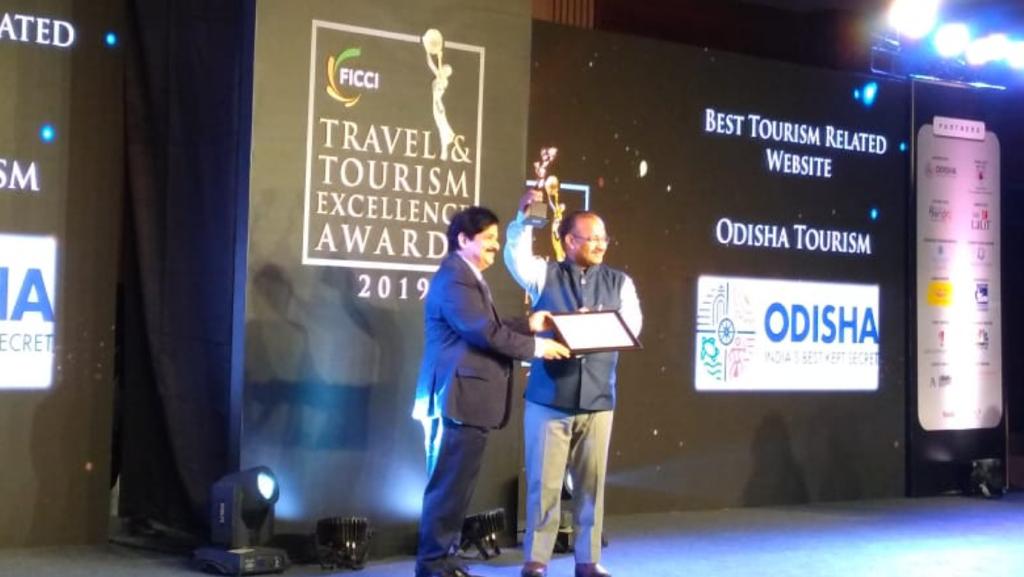
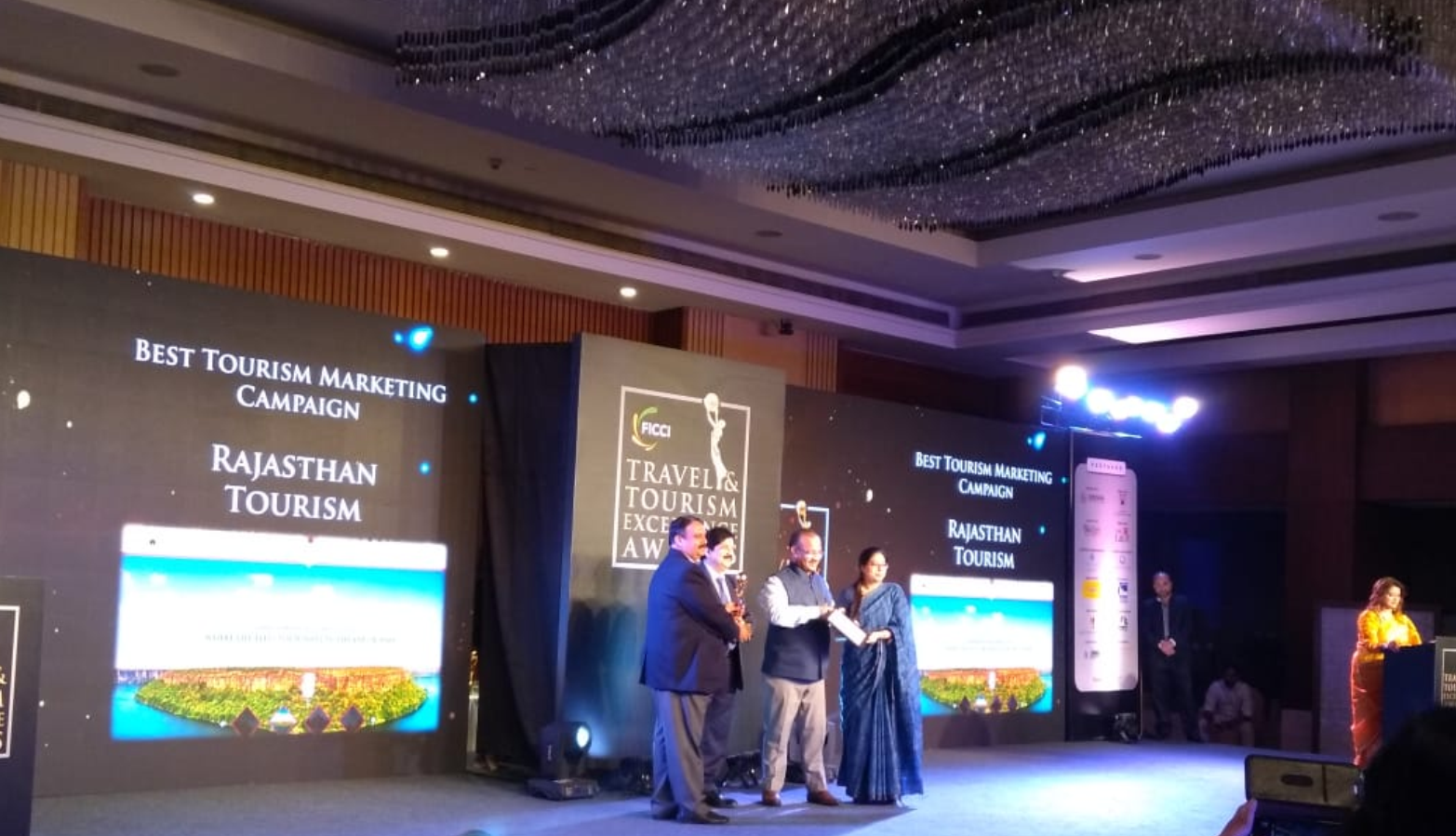
“FICCI launched its first edition of Travel and Tourism Excellence Awards at a grand ceremony, last friday, at The Lalit Hotel, New Delhi, and it was a pleasure for me to be the Chairperson of the Jury, constituted by FICCI for these awards.

Rewards and recognitions have tremendous significance in travel & tourism sector, in motivating, inspiring and energizing people at work place. Keeping this fact in mind, Ministry of Tourism has been giving National Tourism Awards for many years and there are many more institutions and organizations in travel & tourism industry which have initiated to give awards to all those who have done a great job in travel & tourism space and whose success stories are worth emulating. FICCI also instituted these awards with a view to recognising organisations and individuals for their contribution to travel & tourism industry; encourage entrepreneurship and innovation and to honour those who have contributed to the Indian economy through tourism.

While, I compliment FICCI for having adopted a professional, objective and transparent mechanism for selecting the awardees, their policy of covering a wide range of verticals, themes and new areas of travel & tourism, in the first edition itself, is laudable.

FICCI has been working in the field of travel & tourism for the past three decades and is one of the most prestigious institutions in the eyes of Tourism Ministry, State Tourism Departments and Tourism Fraternity of India.

FICCI Awards therefore are as prestigious as the institution itself.”

Addressed at FICCI Awards event and gave away awards for some award categories.

9th ADTOI Convention at Ahmedabad

“Domestic Tourism in India has been growing consistently at more than 13% since 1991. The year 2018 registered a record 1852 million domestic tourist visits within India, more than the International tourists, travelling all around the globe. With increasing passion of travelling among millennial and youth of India, increasing disposable income, greater ease and comfort of travel, application of digital technology in tourism sector and ‘domestic tourism-friendly’ policies of Union Government, India is poised for achieving greater heights in domestic tourism area.

The strong pitch for domestic tourism, made by Hon’ble Prime Minister of India in his Independence Day speech urging Indians to visit at least 15 local destinations by 2022 has further energized the domestic tourism segment of the Country.

Anticipating higher growth of tourism in days to come, it is essential that the supply of tourism infrastructure and services should match with increasing demand. Although the Union Government has been trying to bridge the gap that exists in terms of infrastructure, services and skilled human resource, through schemes like Swadesh Darshan, PRASHAD, UDAN and Skilling, the country requires deeper and closer engagement between Government and the Private sector.

It is time that State Governments also enhanced collaboration and interaction with the tourism industry, tourism associations and other private stakeholders under Public Private Partnership (PPP) Model.”

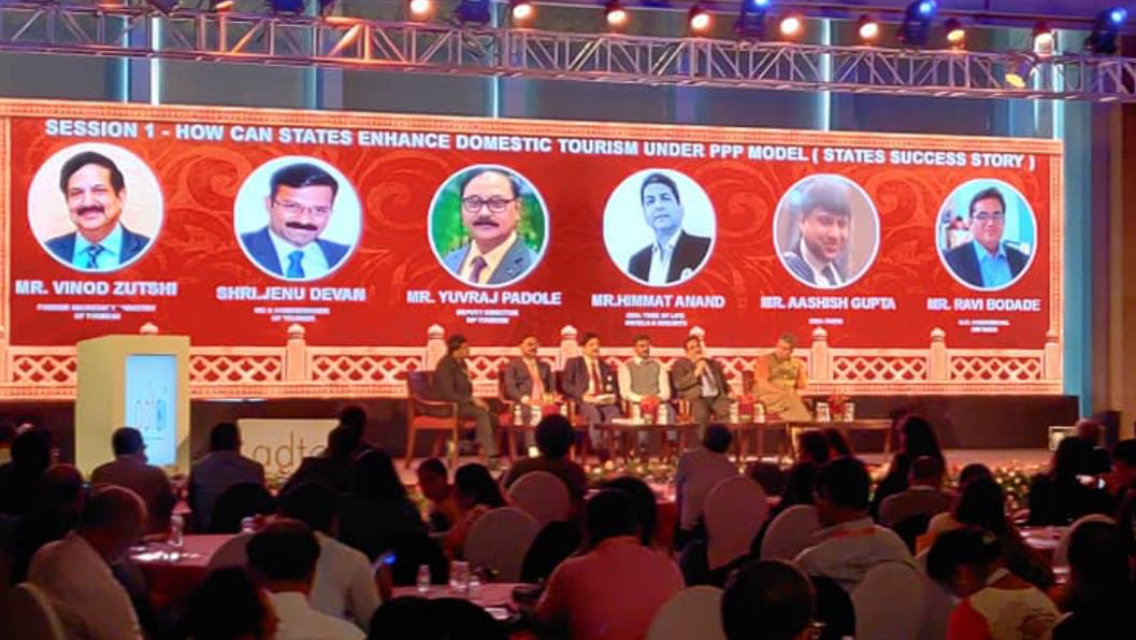
Attended the 9th ADTOI Convention at Ahmedabad and Moderated the Panel Session on the subject “How Can States Enhance Domestic Tourism – Under PPP Model”.